Sunday, December 9, 2007, 12:49 PM - log
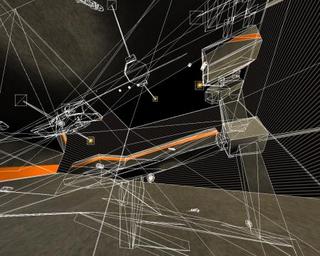
The q3apd project has been properly archived, with the inclusion of the LoveBytes06 Festival video documentation and galleries, here.
| permalink
Friday, December 7, 2007, 02:37 PM - log
Hyperform Net Gallery has been kind enough to make me Artist of the Month for December 07, focussing on levelHead. Big thanks to all those involved at Hyperform.
Friday, December 7, 2007, 10:35 AM - log
Jean Poole was commissioned by Arnolfini to write on one or two aspects of my work over the years. Here's the text.
Thankyou Jean!
Saturday, November 10, 2007, 04:55 PM - log
Here's a manual I wrote introducing the basics of modeling, texturing and rendering using the excellent open-source software Blender for the FLOSSManuals project.
Later on I'll post a section on the Realtime Game Engine part of Blender toward the ends of rapidly prototyping game/3D interface ideas.
If you're interested in translating this manual into languages other than Dutch (Walter Langelaar is working on that) pls get in touch!
Monday, July 24, 2006, 06:08 PM - log
The slightly unweildy title is "
Buffering Bergson: Matter and Memory in 3D Games, soon to be published in a collection of essays called 'Emerging Small Tech' by The University of Minnesota Press.
The paper was actually written some time ago and I've been meaning to upload papers I've written to this blog. Let this be the first.
Sunday, July 9, 2006, 04:43 PM - log
For those of you that weren't there, here are the lecture notes, in HTML, of the first half of my day-class at the FAMU in Prague. Thanks to CIANT and to the students for a fun and productive day.
Tuesday, June 27, 2006, 12:45 AM - log
many of you have written to me about the Blender --> PureData HOWTO i wrote up last year and how you've used it in your own projects. it's great to see this simple tute forming the basis of a few workshops and university classes now also (here's looking at you Andy!).it seems the Wiretap site is currently down - and has been for a while. for this reason you'll probably be missing an essential ingredient of the tutorial, the pyKit Python -> OSC interface libraries.
because i'm very nice, i've archived them here until they're back online.
Friday, November 25, 2005, 10:20 PM - log
I've been meaning to put these up for a while: documents of experiments in the extents of the Ogre3D material framework, pix's 'OgreOSC' implementation and particle systems (both his and the native Ogre3D PS) while working on the TRG project. This was all done around a year ago now, preserved here for some semblance of posterity. Ogre3D has since grown alot and is currently serving as the basis for the next generation of the fijuu project. Examples below using OSC were driven with PD as the control interface.material-skin A demo using wave_xform to manipulate textures to an oscillation pattern across two dimensions whose periods are out of phase. The material is scrolled across a static convolved mesh creating interference patterns.
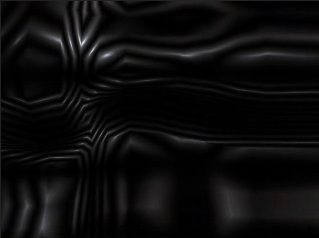
The syntax is simplistic and easy to work with. Here's an example as used for the above movie:
material tmp/xform

{

    technique

    {

            pass

            {

                    scene_blend add

                    depth_write off

                     texture_unit

                    {

                            texture some.png

                            wave_xform scroll_x sine 1.0 0.02 0.0 0.5

                            wave_xform rotate sine 0.0 0.02 0.0 1.0

                            env_map planar

                    }

            }

      }

}
material-wine The same as above, but exploring alpha layers and some new blend modes
particle-glint A short life particle system using native ogre particle functions. Linear force along y causes particles to rise up as they expire while new particles are seeded within fixed bounds below.
particle-hair Altering the particle length and using colour blending to give the effect of hair/rays.
particle-horiz Another version of above. reasonably pointless.
particle-hair2 Hair effect with more body 'n' shine.
particle-bloom a remix of pix's swarm effect using a few blend modes, force affectors and some texture processing.
particle-bloempje another remix of pix's swarm effect.
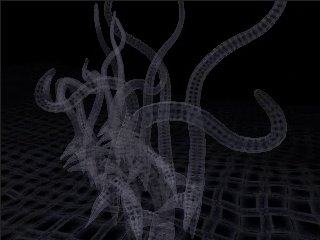
techno-tentacle example of using OSC to drive animation tracks. Here pitch analysis on an arbitrary audio track is passed to OSC which then controls playback period and mix weights between two armature animation tracks. Tentacles dance around as though Pixar was paying me. The tentacle has about 30 bones and has been instantiated 12 times in the scene. Individual control is possible as are the use of more animation tracks.
animated-textures basic example of animated textures in use.
animated-textures-LSCM another example of animated textures in use but on a mesh of 382 faces. the mesh has been LSCM unwrapped to create 'seamless' UV coords.
back