<?xml version="1.0" encoding="ISO-8859-1"?>
<rdf:RDF xmlns:rdf="http://www.w3.org/1999/02/22-rdf-syntax-ns#" xmlns:ref="http://purl.org/rss/1.0/modules/reference/" xmlns:dc="http://purl.org/dc/elements/1.1/" xmlns="http://purl.org/rss/1.0/">
	<channel rdf:about="http://ljudmila.org/~julian//rss.rdf">
		<title>/var/log/sysblog</title>
		<link>http://ljudmila.org/~julian/blog.php</link>
		<description><![CDATA[&quot;The generation of random numbers is too important to be left to chance&quot;
-Robert R. Coveyou, Oak Bridge National Laboratory]]></description>
		<items>
			<rdf:Seq>
				<rdf:li resource="http://ljudmila.org/~julian/?entry=entry090801-014338" />
				<rdf:li resource="http://ljudmila.org/~julian/?entry=entry090730-124110" />
				<rdf:li resource="http://ljudmila.org/~julian/?entry=entry090721-175957" />
				<rdf:li resource="http://ljudmila.org/~julian/?entry=entry090717-154145" />
				<rdf:li resource="http://ljudmila.org/~julian/?entry=entry090629-183520" />
				<rdf:li resource="http://ljudmila.org/~julian/?entry=entry090520-181441" />
				<rdf:li resource="http://ljudmila.org/~julian/?entry=entry090503-144223" />
				<rdf:li resource="http://ljudmila.org/~julian/?entry=entry090414-215557" />
				<rdf:li resource="http://ljudmila.org/~julian/?entry=entry090402-015427" />
				<rdf:li resource="http://ljudmila.org/~julian/?entry=entry090331-225510" />
				<rdf:li resource="http://ljudmila.org/~julian/?entry=entry090326-230647" />
				<rdf:li resource="http://ljudmila.org/~julian/?entry=entry090321-234631" />
				<rdf:li resource="http://ljudmila.org/~julian/?entry=entry090315-202204" />
				<rdf:li resource="http://ljudmila.org/~julian/?entry=entry090314-174541" />
				<rdf:li resource="http://ljudmila.org/~julian/?entry=entry090306-191945" />
				<rdf:li resource="http://ljudmila.org/~julian/?entry=entry090227-025400" />
				<rdf:li resource="http://ljudmila.org/~julian/?entry=entry090226-202213" />
				<rdf:li resource="http://ljudmila.org/~julian/?entry=entry090226-201045" />
				<rdf:li resource="http://ljudmila.org/~julian/?entry=entry080924-173205" />
				<rdf:li resource="http://ljudmila.org/~julian/?entry=entry080826-012232" />
				<rdf:li resource="http://ljudmila.org/~julian/?entry=entry080823-044017" />
				<rdf:li resource="http://ljudmila.org/~julian/?entry=entry080730-091009" />
				<rdf:li resource="http://ljudmila.org/~julian/?entry=entry080729-131238" />
				<rdf:li resource="http://ljudmila.org/~julian/?entry=entry080718-190651" />
				<rdf:li resource="http://ljudmila.org/~julian/?entry=entry080714-012942" />
				<rdf:li resource="http://ljudmila.org/~julian/?entry=entry080711-133852" />
				<rdf:li resource="http://ljudmila.org/~julian/?entry=entry080707-145438" />
				<rdf:li resource="http://ljudmila.org/~julian/?entry=entry080619-165309" />
				<rdf:li resource="http://ljudmila.org/~julian/?entry=entry080523-180044" />
				<rdf:li resource="http://ljudmila.org/~julian/?entry=entry080421-174437" />
				<rdf:li resource="http://ljudmila.org/~julian/?entry=entry080420-001300" />
				<rdf:li resource="http://ljudmila.org/~julian/?entry=entry080414-125632" />
				<rdf:li resource="http://ljudmila.org/~julian/?entry=entry080314-180052" />
				<rdf:li resource="http://ljudmila.org/~julian/?entry=entry080228-202938" />
				<rdf:li resource="http://ljudmila.org/~julian/?entry=entry080206-225441" />
				<rdf:li resource="http://ljudmila.org/~julian/?entry=entry080123-155728" />
				<rdf:li resource="http://ljudmila.org/~julian/?entry=entry080101-184111" />
				<rdf:li resource="http://ljudmila.org/~julian/?entry=entry071216-153138" />
				<rdf:li resource="http://ljudmila.org/~julian/?entry=entry071209-124954" />
				<rdf:li resource="http://ljudmila.org/~julian/?entry=entry071207-143730" />
				<rdf:li resource="http://ljudmila.org/~julian/?entry=entry071207-103500" />
				<rdf:li resource="http://ljudmila.org/~julian/?entry=entry071110-165512" />
				<rdf:li resource="http://ljudmila.org/~julian/?entry=entry071015-182557" />
				<rdf:li resource="http://ljudmila.org/~julian/?entry=entry070802-180922" />
				<rdf:li resource="http://ljudmila.org/~julian/?entry=entry070731-115128" />
				<rdf:li resource="http://ljudmila.org/~julian/?entry=entry070731-113723" />
				<rdf:li resource="http://ljudmila.org/~julian/?entry=entry070618-155607" />
				<rdf:li resource="http://ljudmila.org/~julian/?entry=entry070520-185233" />
				<rdf:li resource="http://ljudmila.org/~julian/?entry=entry070505-143000" />
				<rdf:li resource="http://ljudmila.org/~julian/?entry=entry070408-035654" />
				<rdf:li resource="http://ljudmila.org/~julian/?entry=entry070319-232311" />
				<rdf:li resource="http://ljudmila.org/~julian/?entry=entry070317-020540" />
				<rdf:li resource="http://ljudmila.org/~julian/?entry=entry070303-213059" />
				<rdf:li resource="http://ljudmila.org/~julian/?entry=entry070206-020024" />
				<rdf:li resource="http://ljudmila.org/~julian/?entry=entry070202-210936" />
				<rdf:li resource="http://ljudmila.org/~julian/?entry=entry070201-180025" />
				<rdf:li resource="http://ljudmila.org/~julian/?entry=entry070114-032258" />
				<rdf:li resource="http://ljudmila.org/~julian/?entry=entry061216-164320" />
				<rdf:li resource="http://ljudmila.org/~julian/?entry=entry061216-151220" />
				<rdf:li resource="http://ljudmila.org/~julian/?entry=entry061027-223545" />
			</rdf:Seq>
		</items>
	</channel>
	<item rdf:about="http://ljudmila.org/~julian/?entry=entry090801-014338">
		<title>levelHead in Incheon, Korea.</title>
		<link>http://ljudmila.org/~julian/blog.php?entry=entry090801-014338</link>
		<description><![CDATA[
An-nyong/Hi<br><br>

The Whitney&#039;s Christiane Paul is co-curating the <a href = "http://www.indaf.org/e_bmu02/bmu02_02.asp">Incheon Digital Arts Festival</a> (warning: excessive flash menus), in <a href = "http://maps.google.com/maps?f=q&source=s_q&hl=en&geocode=&q=incheon,+korea&ie=UTF8&ll=37.466139,126.705322&spn=0.562438,1.231842&t=h&z=10&iwloc=A">Incheon</a>, and has invited <a href = "http://julianoliver.com/levelhead">levelHead</a> to be part of the show.<br><br>
I&#039;ll be in town for just a few days setting up in time for an opening on the 7th of August. If you are (by some slivver of statistical improbability) in Incheon this time of year, stop in and see the show! <br><br>
It looks like a fine lineup of work indeed..
]]></description>
	</item>
	<item rdf:about="http://ljudmila.org/~julian/?entry=entry090730-124110">
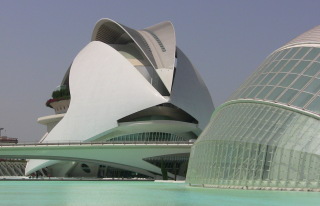
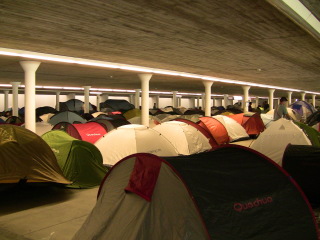
		<title>Campus Party Valencia</title>
		<link>http://ljudmila.org/~julian/blog.php?entry=entry090730-124110</link>
		<description><![CDATA[
<br>
<center>
<img src = "images/valencia-cp-09.jpg">
<br><br>
<img src = "images/valencia-cp-09-2.jpg">
</center>
]]></description>
	</item>
	<item rdf:about="http://ljudmila.org/~julian/?entry=entry090721-175957">
		<title>Why don&#039;t you eat meat?</title>
		<link>http://ljudmila.org/~julian/blog.php?entry=entry090721-175957</link>
		<description><![CDATA[
<br>
I&#039;ve been a vegetarian for most of my life. I also travel one or two weeks a month around Europe and abroad and while travelling I&#039;m lucky enough to be treated to dinner. Often I find myself rejecting a plate of fish or meat offered to me, even after having made it clear I don&#039;t eat either.  
<br><br>
It&#039;s at this point someone on the table will ask me a slew of questions around my dietary choices, a topic I&#039;d rather avoid during a social gathering. To these ends I&#039;ve written a little Q+A sheet to save people the bother.
<br><br>
<b>"Why don&#039;t you eat meat? (1)"</b>
<br><br>
<i>
	Only to make you feel so awfully guilty about what&#039;s on your plate that you
	will want to strike up a debate with me, vainly hoping to crush me in a hurricane of reason and common sense that will consume the entire
	duration of this social gathering, alienating everyone present and ruining
	the evening.
</i>
<br><br>
<b>"Why don&#039;t you eat meat? (2)"</b>
<br><br>
<i>
Because animal meat reminds me too much of human meat and I&#039;m really trying to quit
</i>
<br><br>
<b>"Why don&#039;t you eat meat? (3)"</b>
<br><br>
<i>
Because everytime I eat a cow, a puppy dies.
</i>
<br><br>

<b>"Why don&#039;t you eat meat? (4)"</b>
<br><br>
<i>
Why don&#039;t you live in Luxembourg?
</i>
<br><br>
<b>"Why don&#039;t you eat meat? (5) Meat is a natural part of the human diet."</b>
<br><br>

<i>
	People started eating meat out of necessity in harsh conditions, not because braised duck-liver with a sprig of rosemary was a hit at parties. <br><br>

Our bodies
	reflect that we haven&#039;t done it for long: unlike cats, sharks and dogs, we have never killed animals with our own
	hands and/or teeth. We&#039;ve had to invent weapons to do so, the same weapons we
	used to kill other people. 

<br><br>
	Just as I do not need to kill other people, expanding or defending territory, I
	don&#039;t need to eat animal parts to be a healthy human. 

<br><br>
</i>
"<b>What&#039;s the ethical difference between eating plants and animals? Both are
living. Research suggest plants feel pain"</b>.
<br><br>
<i>
The broader picture is that it&#039;s ecologically more sane to eat
	plants directly than chopping down hectares of forest to grow plants to feed
	them to C02 burping cows and pigs, some of which will become tissue, some of
	which will be eaten by humans, all at the great expense of oxygen, electricity, diesel and life. If an ethics here is to include a reduction of suffering, eating parts of plants rather than those of animals is the better bet.

<br><br>
	All said, the difference for me is still largely personal. Prior to becoming vegetarian I
	lived on a small farm; I&#039;ve killed and dismembered many animals. I&#039;ve also killed and
	dismembered many broccoli. The result of my findings is that I empathised
	closely with animals while killing them, especially when using a knife. I didn&#039;t (and still don&#039;t) empathise with
	broccoli, regardless of weapon.

<br><br>
	
</i>

"<b>If you were trapped on a desert island, and were starving, would you kill
and eat animals?"</b>

<i>
<br><br>
	If it was a desert island there wouldn&#039;t be any animals to eat.

</i>

<br><br>
"<b>If you were trapped somewhere there were animals, and were starving, would
you kill and eat animals?"</b>

<i>
<br><br>
	Quite likely.
</i>

<br><br>
"<b>If we don&#039;t eat cows they will breed and take over the earth"</b>

<i>
<br><br>
	It is getting late..
</i>

<br><br>
"<b>It&#039;s rude to refuse the food of local cultures when offered to you, regardless
of your beliefs."</b>

<i>
<br><br>
	It&#039;s ruder to insist on making my personal dietary choices the principal topic
	of discussion during a social dinner.
</i>

<br><br>
"<b>Cows, sheep, pigs are part of the human food chain."</b>
 	
<i>
<br><br>
	Any so-called &#039;food chain&#039; reflects dietary context; I don&#039;t need to eat meat to survive in my
	21st century, largely western, dietary context. 
<br><br>
Regardless, if you think paying
	people to prod cows, sheep and pigs into the back of a truck, drive them scared
	out of their minds for miles in their own shit, lead them into a large building
	with men in white overalls bearing stun guns and knives reflects
	anything as congenital as a &#039;food chain&#039;, you&#039;re out of your depth..
</i>

<br><br>
"<b>Supporting the Dairy Industry enslaves animals too. You&#039;re eating cheese."</b>

<i>
<br><br>
	You&#039;re right. I was vegan in the past for 5 years or so and while quite
	healthy I became thinner than I&#039;d like. Since living in Europe I&#039;ve also come to
	really like some of the cheese I encounter. Nonetheless, this does make me something of a hypocrite and I intend to transition back to veganism one day, this time
	with a better diet.
</i>

<br><br>
<b>"Don&#039;t you miss meat? It must be hard always having to restrain yourself from gorging on it every once and a while."</b>
<br><br>
<i>
No I don&#039;t miss it. I haven&#039;t eaten meat in so long that the smell of it provides immediate bodily confirmation that it&#039;s just nothing I would ever want to put in my mouth, no more than sticks, carpet or creamed-corn (yuck!).
</i>

<br><br>
"<b>Do you mind if I eat meat in front of you? I guess it looks kind of
gross."</b>

<i>
<br><br>
	Not at all. Thanks for asking.
</i>

]]></description>
	</item>
	<item rdf:about="http://ljudmila.org/~julian/?entry=entry090717-154145">
		<title>Four Interrupted Carparks.</title>
		<link>http://ljudmila.org/~julian/blog.php?entry=entry090717-154145</link>
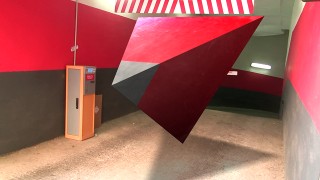
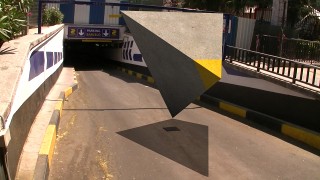
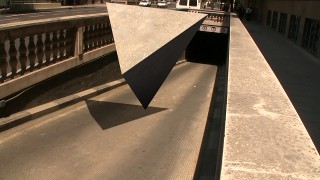
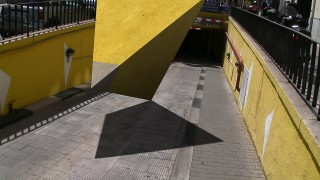
		<description><![CDATA[Four carparks from around Madrid are interrupted with a geometric primitive.<br><br>
<center>
<img src="four-interrupted-carparks/images/3-sml.jpg"><br><br>
<img src="four-interrupted-carparks/images/1-sml.jpg"><br><br>
<img src="four-interrupted-carparks/images/2-sml.jpg"><br><br>
<img src="four-interrupted-carparks/images/4-sml.jpg"><br><br>
</center>
<a href = "http://vimeo.com/5638211">Here&#039;s a video</a> (Vimeo) and a <a href = "http://julianoliver.com/four-interrupted-carparks/">project page</a>.
]]></description>
	</item>
	<item rdf:about="http://ljudmila.org/~julian/?entry=entry090629-183520">
		<title>Hambre 09: The Atocha 24 Insertions</title>
		<link>http://ljudmila.org/~julian/blog.php?entry=entry090629-183520</link>
		<description><![CDATA[
<center><img src= "atocha24/images/invitacion_HAMBRE_09.jpg"></center>
Hambre09 opened on Saturday at Calle de Atocha 24, here in Madrid. It was a super opening, a great turn-out and some fine work shown. Hambre&#039;09 is open until the 5th, so if you&#039;re in the area come down and check it out, if only to see an old Madrilenan Art Deco mall before it wilts into plate-glass and brushed steel.<br><br>
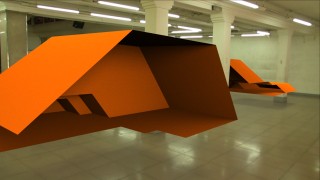
I&#039;ve created a page documenting my contribution to the show, &#039;The Atocha 24 Insertions&#039;.<br><br>
<a href = "http://julianoliver.com/atocha24/"
<center><img src="atocha24/images/Oliver3-vsml.jpeg"></center></a>
<br><br>You can read about it <a href = "http://julianoliver.com/atocha24/">here</a> and see an edited video <a href ="http://vimeo.com/5341989">here</a>.
]]></description>
	</item>
	<item rdf:about="http://ljudmila.org/~julian/?entry=entry090520-181441">
		<title>Massive speedup in Artvertiser code</title>
		<link>http://ljudmila.org/~julian/blog.php?entry=entry090520-181441</link>
		<description><![CDATA[I got back from Cartagena a few days ago after giving an Artvertiser workshop there with Clara and Diego for the festival &#039;Mucho Mas Mayo&#039;.<br /><br />Performance there was heavily tested in the outdoors as we swapped advertisements around the workshop area (Carrefour particularly) using a Vuzix iWear Head Mounted Display and Quickcam Pro 9000 (photos soon). When it worked it worked quite well- surprisingly so given the intensity of Murcian sunlight.<br /><br />However, on the train back I had a long think about where improvements could be made. This morning I went through the code top to bottom and have managed to achieve at least a 2x speedup in the tracking and augmentation. Really quite something for generic image tracking.. It&#039;s now about as fast as ARToolKit, when tested on my Thinkpad X200, and very stable. This means we should see significant performance on smaller devices.. I&#039;m tempted to throw it at the BeagleBoard again..<br /><br />Anyway, now it&#039;s time to get out into the streets of Madrid and take it for a drive!]]></description>
	</item>
	<item rdf:about="http://ljudmila.org/~julian/?entry=entry090503-144223">
		<title>levelHead receives award at Laval Virtual</title>
		<link>http://ljudmila.org/~julian/blog.php?entry=entry090503-144223</link>
		<description><![CDATA[
I was lucky enough to get a major award at <a href = "http://www.laval-virtual.org/">Laval Virtual</a> this year for levelHead.

Thanks to <a href = "http://akihiko.shirai.as/">Shirai</a> for picking up the award. Unfortunately I wasn&#039;t able to make it to Laval this year in person. I was in Lima, Peru teaching at Interactivos&#039;09.
<br><br>
My assistant <a href ="http://nonsenseengineering.org/">Pablo</a> flew in to set up the piece and it seems he did a good job indeed.<br><br>
Other winners in the first place &#039;Invited&#039; category were:<br><br>
YOTARO, University of Tsukuba<br>
Copycat Hand for All, University of Tsukuba<br>
Space Trash, Institute of Graphics and Paralell Processing, JKU, Linz
<br><br>
Cheers!
]]></description>
	</item>
	<item rdf:about="http://ljudmila.org/~julian/?entry=entry090414-215557">
		<title>See you at the See Conference</title>
		<link>http://ljudmila.org/~julian/blog.php?entry=entry090414-215557</link>
		<description><![CDATA[
As the title suggests I&#039;ll be at <a href ="http://see-conference.com">The See Conference</a> this year in Wiesbaden presenting a paper and some of my new work. Here&#039;s a synopsis of the proceedings straight from the site itself:
<br><br><i>
"see" is back again, driven by last year&#039;s success and the extensive positive feedback we received. In 2009 the see conference will again bring together fields like design, art, new media and architecture. We will explore new approaches that are being developed to confront the flood of information and transform it into useful knowledge. As before, we&#039;ve got top speakers lined up, some of whom are Aaron Koblin of Google Creative Lab, the software artist Julian Oliver, Sebastian Oschatz from MESO Digital Interiors and Eric Rodenbeck from Stamen Design. The see conference #4 will take place on April 18th 2009 at the historic Caligari Theatre in Wiesbaden.</i><br><br>
For those of you not going be sure to <a href = "http://see-conference.com/#/en/Livestream">catch the stream</a>!

<br />]]></description>
	</item>
	<item rdf:about="http://ljudmila.org/~julian/?entry=entry090402-015427">
		<title>A Video Postcard</title>
		<link>http://ljudmila.org/~julian/blog.php?entry=entry090402-015427</link>
		<description><![CDATA[
A little demo of the Artvertiser at work on a postcard. Here I&#039;m testing the tracking in relatively low-light and during plenty of movement.<br><br>
<center>
<object width="400" height="300"><param name="allowfullscreen" value="true" /><param name="allowscriptaccess" value="always" /><param name="movie" value="http://vimeo.com/moogaloop.swf?clip_id=3957693&server=vimeo.com&show_title=1&show_byline=1&show_portrait=0&color=&fullscreen=1" /><embed src="http://vimeo.com/moogaloop.swf?clip_id=3957693&server=vimeo.com&show_title=1&show_byline=1&show_portrait=0&color=&fullscreen=1" type="application/x-shockwave-flash" allowfullscreen="true" allowscriptaccess="always" width="400" height="300"></embed></object>
</center><br /><a href="http://vimeo.com/3957693">Video Postcard</a> from <a href="http://vimeo.com/julianoliver">Julian Oliver</a> on <a href="http://vimeo.com">Vimeo</a>.
]]></description>
	</item>
	<item rdf:about="http://ljudmila.org/~julian/?entry=entry090331-225510">
		<title>Camshift OSC</title>
		<link>http://ljudmila.org/~julian/blog.php?entry=entry090331-225510</link>
		<description><![CDATA[<br>

<a href = "share/code/camshiftOSC.c">Here&#039;s a little standalone utility</a> I put together for a couple of students while teaching at the Medialab Prado. I&#039;m posting it here in the event someone else finds it useful..
<br><br>
CamshiftOSC adds network functionality to OpenCV&#039;s Camshift demo. It allows you to interactively select a region of interest within a live video stream and send the center and relative angle of that region to OSC clients (Pure Data, Blender, Processing etc) quickly and simply. In the workshop it was used for tracking the tops of people&#039;s heads but any distinct clump of pixels (an LED, a flame, a cat) can also be used.
<br><br>
Start it like so:
<br>
<br /><code>./camshiftOSC &lt;camera index&gt; &lt;IP&gt; &lt;port&gt;</code><br />
<br>
So, if you wanted to capture from /dev/video1 and send the center of a tracked area to port 4950 to a computer 193.2.132.73 on the internet, you&#039;d:
<br><br>
<code>./camshiftOSC 1 193.2.132.73 4950</code>
<br><br>
Use 127.0.0.1 if you want to send to a client on the same host.
<br><br>
It should compile on any Linux system with liblo and opencv installed.
<br><br>
To get up and running on Ubuntu or Debian systems:
<br><br>
<code>sudo apt-get install libcv-dev liblo-dev</code>
<br><br>
Compile it like so:
<br><br>
<code>gcc -lcv -lcvaux -lhighgui -llo -I/usr/include/opencv -I/usr/include/lo camshiftOSC.c -o camshiftOSC</code>
<br><br>
Be sure to play with the sliders (&#039;VMax&#039; especially) to get the best results.<br><br>
Cheers
]]></description>
	</item>
	<item rdf:about="http://ljudmila.org/~julian/?entry=entry090326-230647">
		<title>Light, Space and Perception II</title>
		<link>http://ljudmila.org/~julian/blog.php?entry=entry090326-230647</link>
		<description><![CDATA[
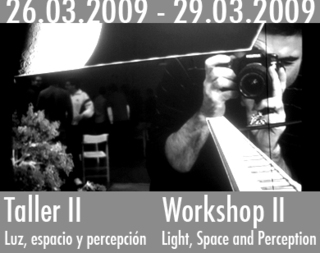
<center><img src = "images/lep.jpeg"></center><br><br>
The second edition of the Luz, Espacio y Percepcion workshops has begun! <BR><BR>It&#039;ll be a super few days. If you&#039;re in Madrid, drop in and witness materialisation of the following projects:<br><br>
Analog hologram matrix  - Emanuel Andel<br>
Buscando Aberraciones -  Óscar Sainz / Mónica Bujalance<br>
Caleidoscopio Mutante - José Manuel González Martínez<br>
La sombra de la duda - blablabLAB (Raúl Nieves)<br>
Medianeras Vivas - Belén Butragueño Díaz<br>
Through the Looking-Glass: Opening Windows in the Wall - Manuel Sánchez Gestido<br>
Versión_Beta - David Rodríguez
]]></description>
	</item>
	<item rdf:about="http://ljudmila.org/~julian/?entry=entry090321-234631">
		<title>Portable webcam capture code with OpenCV.</title>
		<link>http://ljudmila.org/~julian/blog.php?entry=entry090321-234631</link>
		<description><![CDATA[<br>I notice that lots of people are looking for a simple and portable example of how to capture and display video from a webcam. I&#039;ve written up an example in around 70 lines of code using <a href=  "http://en.wikipedia.org/wiki/OpenCV">OpenCV</a> and C++ and posted it <a href = "http://selectparks.net/~julian/share/code/captureFromCam.cpp"> here</a> in the interest that it may be useful. Because it uses OpenCV you can also use it as a capture skeleton for a computer vision application.

<br><br>I&#039;ve tested it on a GNU/Linux system but it should compile fine on OS\X. See the comments for how to compile and use.. <br><br>Hope that helps!
]]></description>
	</item>
	<item rdf:about="http://ljudmila.org/~julian/?entry=entry090315-202204">
		<title>Appearances in two new books.</title>
		<link>http://ljudmila.org/~julian/blog.php?entry=entry090315-202204</link>
		<description><![CDATA[
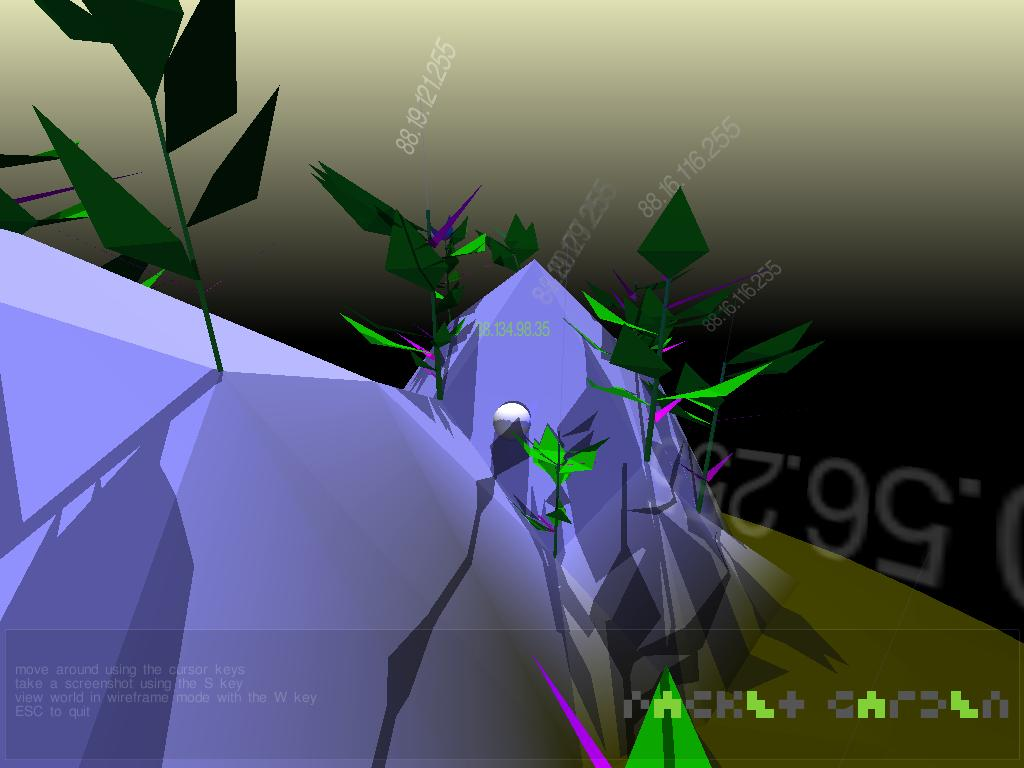
The German publisher &#039;Gestalten&#039; has an entry on <a href = "http://julianoliver.com/pg"> Packet Garden </a>in their recent book <a href ="http://www.gestalten.com/books/detail?id=ceaea7651adf9ba0011b78b89b9d0295&count=10">Data Flow</a> which looks at the visual culture and divergent practices surrounding information visualisation. 
<center><img src ="images/data-flow.jpg"></center>
As an aside you may have noticed that the packetgarden.com domain is being squatted.. Sadly I never got an email from the domain hosts about it expiring and boof, the next day it was worth a lot of money.. Please update your bookmarks to use <a href = "http://julianoliver.com/pg">http://julianoliver.com/pg</a> from here on!<BR><BR>
In other news the Swiss Arts Council commissioned a text from me on Art and Videogames for a publication called &#039;Swiss Design in Hollywood&#039;. <a href = "http://www3.pro-helvetia.ch/expo/sdih/en/text-jeu-art.html">Here&#039;s the English version of the text</a> that appears in the book (in French, Spanish and English - the latter version was heavily truncated). Here&#039;s the book itself:<br><br>
<center><a href ="http://www3.pro-helvetia.ch/expo/sdih/en/index.html"><img src="images/swiss-design-in-hollywood.jpg"></a></center>.<br><br>The book is designed to accompany an exhibition of the same name, curated by Patrick J. Gyger, Director of <a href = "http://www.ailleurs.ch/"> Maison d&#039;Ailleurs</a> the museum of Science Fiction, Utopias and Extraordinary Journeys in Yverdon, Switzerland. Maison d&#039;Ailleurs is well worth a visit by the way, truly an astonishing and beautifully designed museum. An archive that ought to be given room on any Ark of human culture and thought..<br><br>So it followed that <a href = "http://lapetiteclaudine.com">Marta</a> (check out <a href = "http://www.impedimenta.es/ficha.php?id=34">her new book</a>!) and I went to Valencia to visit Patrick who was opening the exhibition there.  It had some great prints by illustrators John Howe, Christian L. Scheurer, Deak Ferrand, Natasha Devaud, Nicolas Imhof, Brigitte Wuest, Silvio Aebischer, Simon Christen, Nadja Bonacina, Simon Otto si Alex Ongaro. <br><br><a href ="http://en.wikipedia.org/wiki/John_Howe">John</a> <a href ="http://www.john-howe.com/">Howe</a>, concept artist behind a great deal of films and games, was present at the opening. Talking with him - when he wasn&#039;t autographing a stream of books - was a rare treat and I look forward to our next meeting indeed..
]]></description>
	</item>
	<item rdf:about="http://ljudmila.org/~julian/?entry=entry090314-174541">
		<title>Puppy love.</title>
		<link>http://ljudmila.org/~julian/blog.php?entry=entry090314-174541</link>
		<description><![CDATA[
<center><a href = "theartvertiser/images/beagle-on-table_med.JPG"><img src="theartvertiser/images/beagle-on-table_sml.JPG"></center><br>
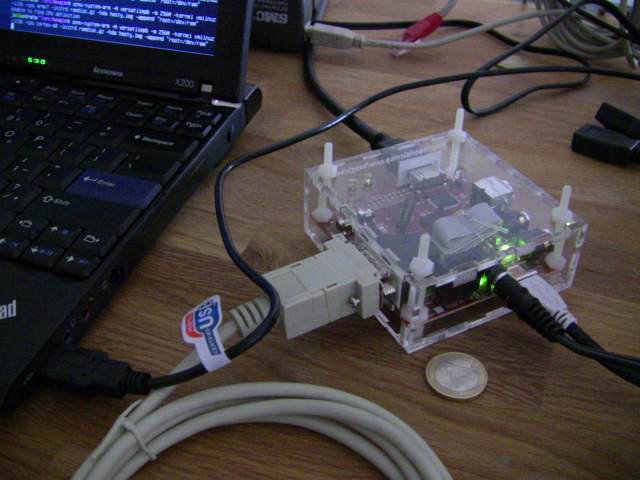
The <a href ="http://beagleboard.org">Beagle Board</a> is our first target platform for the binoculars of <a href ="http://theartvertiser.com">The Artvertiser</a> project. Right now I&#039;m deep in documentation reading about how to cross compile for the device using <a href ="http://wiki.openembedded.net/index.php/Main_Page">Open Embedded</a>. <br><br>
It&#039;s a pretty incredible device, ARMv7 Cortex-8 CPU, low power drain (just 5V @ 2A), OpenGL ES support, DSP chip, HD video capable, DVI and TV out for just EUR116.00.. <br><br>Goodbye Weekend..
]]></description>
	</item>
	<item rdf:about="http://ljudmila.org/~julian/?entry=entry090306-191945">
		<title>Artvertiser Progress Report: Urban Beta</title>
		<link>http://ljudmila.org/~julian/blog.php?entry=entry090306-191945</link>
		<description><![CDATA[

<center><img src="theartvertiser/images/arrebato_small.png"></center><br>

I&#039;ve just posted <a href = "http://vimeo.com/3464018">a video documenting the progress</a> of <a href= "http://theartvertiser.com">The Artvertiser</a>. <br><br>
Aside from the videos below there&#039;s an additional clip of version 0.2 at work on a billboard. You can also see a new &#039;in world&#039; artvert labeling system at work..<br><br>
Enjoy!


]]></description>
	</item>
	<item rdf:about="http://ljudmila.org/~julian/?entry=entry090227-025400">
		<title>PacketGarden footage posted</title>
		<link>http://ljudmila.org/~julian/blog.php?entry=entry090227-025400</link>
		<description><![CDATA[
I&#039;ve posted footage of <a href= "http://julianoliver.com/pg">PacketGarden</a> for those that have never seen it running. You can see it on Vimeo <a href="http://vimeo.com/3295217">here</a>. <br><br>
Worth mentioning I&#039;ll gladly take any help I can get porting it to current versions of those <i>other</i> operating systems (OS X Intel and Windows Vista)!
]]></description>
	</item>
	<item rdf:about="http://ljudmila.org/~julian/?entry=entry090226-202213">
		<title>Artvertiser Developments</title>
		<link>http://ljudmila.org/~julian/blog.php?entry=entry090226-202213</link>
		<description><![CDATA[
<br>

<center><img src="theartvertiser/images/artvert-callao2-sml.png"></center><br>
I&#039;ve made good progress on <a href= "http://theartvertiser.com">The Artvertiser</a> software, with several live tests out in the field proving to be successful. Clara and Diego are working on the hardware, and to those ends we&#039;ve ordered a couple of <a href= "http://beagleboard.org/">Beagle Boards</a> for the handheld device (binoculars).
<br><br>
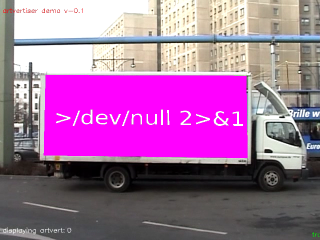
<center><img src="theartvertiser/images/dev-null-truck-sml.png"></center><br>
Here are a couple of videos of recent field tests:<br><br>
<a href="http://selectparks.net/~julian/theartvertiser/movies/callao-substitutions.avi">Callao, Madrid</a>, 18M AVI<br>
<a href="http://selectparks.net/~julian/theartvertiser/movies/zitty-berlin-video-substitution.avi">Heinrich Heine Platz, Berlin</a>, 16M AVI<br>

<a href= "http://selectparks.net/~julian/theartvertiser/movies/ctm09.avi">Alexander Platz, Berlin</a>, 51M AVI<br><br>
Nokia and Google, if you&#039;re reading, feel free to send me some hardware so I can target your platforms (Nokia, your N96 and Google, an HTC Magic +/or Texas Instruments OMAP34x-II MDP Zoom w/Android would be lovely. TY!).. 
<br />]]></description>
	</item>
	<item rdf:about="http://ljudmila.org/~julian/?entry=entry090226-201045">
		<title>*bump*</title>
		<link>http://ljudmila.org/~julian/blog.php?entry=entry090226-201045</link>
		<description><![CDATA[8 countries and 30 planes later.. i&#039;m far too lazy to write a travelogue!<br /><br />anyway, let this post signify my good intention to touch this page more often.]]></description>
	</item>
	<item rdf:about="http://ljudmila.org/~julian/?entry=entry080924-173205">
		<title>Cartofictions slides posted</title>
		<link>http://ljudmila.org/~julian/blog.php?entry=entry080924-173205</link>
		<description><![CDATA[<br>
Last night I gave my lecture <b>Cartofictions: Maps, The Imaginary and Geo-Social Engineering</b> to a surprisingly well-attended room here at <a href = "http://mi2.hr">Mama</a>, Zagreb. The talk went better than the 1.2h talk at <a href = "http://medialab-prado.es/inclusiva-net">Inclusiva-net</a> 7 months ago (video documentation <a href = "http://vimeo.com/784263">here</a>), largely because I hadn&#039;t run amok the night before. <br><br>After the talk several people asked to see my slides and so I&#039;ve made them available. You can <a href ="http://selectparks.net/~julian/share/text/OLIVER_Cartofictions_final.pdf">get them here</a> as a PDF. The folk at Mama said they&#039;ll make the audio available at some point. I&#039;ll keep you posted. ]]></description>
	</item>
	<item rdf:about="http://ljudmila.org/~julian/?entry=entry080826-012232">
		<title>missing horse.</title>
		<link>http://ljudmila.org/~julian/blog.php?entry=entry080826-012232</link>
		<description><![CDATA[Hell hath no fury like a man whose laptop was recently stolen, while eating a delicious breakfast, by very clever thieves.<br /><br />To cut a short story long, the $US is weak against the Euro and I need a new laptop fast, specifically the new Thinkpad T400: the ideal horse for this goucho.<br /><br />If you&#039;re coming to Ars Electronica and want to make some fast money, email me and I can offer you a handsome cash incentive for buying me a laptop and bringing it with you, unboxed. Yes that&#039;s right, I just used the words &quot;handsome cash incentive&quot; and &quot;fast money&quot; on the Internet.<br /><br />Oh, and if you&#039;ve sent me an email at all since January this year, send it to me again..<br />]]></description>
	</item>
	<item rdf:about="http://ljudmila.org/~julian/?entry=entry080823-044017">
		<title>TY FILE TY SP</title>
		<link>http://ljudmila.org/~julian/blog.php?entry=entry080823-044017</link>
		<description><![CDATA[
<img src="images/fiesp.png" align="left" border=5>
<a href ="http://file.org.br/">FILE2008</a> in Sao Paulo was super. Rarely do I meet such an attentive and genuinely interested team responsible for putting an exhibition together. The tech-crew were really on-to-it and the assistants hanging out with the pieces, explaining them to people, were too: they had about 1.5k people come through one Saturday. That requires a lot of patience. <BR><BR>The interior design of the show was clever as were the curatorial choices overall. Anyway, FILE team, here&#039;s my belated thanks. Vivian, Paula and Daniel especially. Your festival rivals anything of its size in Europe..<br><br>

Sao Paulo. Where to start - even a <i>Paulista</i> would ask the same. It&#039;s very diverse, at times rough, vast and complex. 20 Million humans trying to make it work in the metropolitan area (within a violently maldistributed economy) of which I met around 37. Despite being a hard-working, hard-living creed, Paulistas are socially generous; it&#039;s not a myth you can simply walk into a bar and smile your way into a fine night out. <BR><BR>
That said, my dubious companion for most of it wasn&#039;t a Paulista. Rather, it was a certain <a href = "http://en.wikipedia.org/wiki/James_Powderly">James Powderly</a>, ever ripe for some good old-fashioned silliness. Here&#039;s to you James. <a href  ="http://www.boingboing.net/2008/08/19/grls-james-powderly.html">Haven&#039;t heard from you for a few days</a>. Like many I hope you turn up soon. You were half-expecting to get shot. Let&#039;s hope my "not a foreigner and not during the games" theory stands up to your fairly respectable test ;)<br><br>

A fine friend of mine Mariana hooked James up with some local writers/graffers so much time was spent with a <a href="http://graffitiresearchlab.com/?page_id=76">generator, projector, laptop, camera and a laser-pointer</a> around town at night. I learnt a lot about <a href ="http://www.pichacao.com/">Pichação</a>, the name given to a kind of street-writing that at times <a href = "http://www.flickr.com/photos/lassala/sets/72157600287069707/">resembles Egyptian Hieroglyphs</a> and is unique to Brazil (AFAIK). Each has it&#039;s own unique symbolic alphabet relative to clans. Mariana, was good to hang out with you and Lelo. Both talented and super people...]]></description>
	</item>
	<item rdf:about="http://ljudmila.org/~julian/?entry=entry080730-091009">
		<title>levelHead source code released</title>
		<link>http://ljudmila.org/~julian/blog.php?entry=entry080730-091009</link>
		<description><![CDATA[<br>After many requests and a heap of delays the <a href = "http://julianoliver.com/levelhead">levelHead</a> source code is now publically available under the <a href = "http://www.gnu.org/licenses/gpl-3.0.html">General Public License V3.0</a>. All art assets are provided under the <a href ="http://creativecommons.org/licenses/by-sa/3.0/">CC-BY-SA 3.0</a> license. See <a href ="http://selectparks.net/~julian/levelhead/install.html">this install page</a> for full instructions.<br><br>
This is a release intended for developers and those comfortable with the compiling software on Linux systems. As yet there is no binary executable of levelHead. <br><br>More about that soon..
]]></description>
	</item>
	<item rdf:about="http://ljudmila.org/~julian/?entry=entry080729-131238">
		<title>off to Brazil.</title>
		<link>http://ljudmila.org/~julian/blog.php?entry=entry080729-131238</link>
		<description><![CDATA[<br>
<a href = "http://file.org.br"><img src = "images/logofile_eng.gif" align="left"></a> I&#039;m off to Sao Paulo, Brazil tomorrow for the <a href = "http://file.org.br">FILE</a> festival to install <a href ="http://julianoliver.com/levelhead">levelHead</a>.<br><br> Let it be known i&#039;m currently looking for reccommendations of good vegetarian restaurants..]]></description>
	</item>
	<item rdf:about="http://ljudmila.org/~julian/?entry=entry080718-190651">
		<title>Quilted Thought Organ archived.</title>
		<link>http://ljudmila.org/~julian/blog.php?entry=entry080718-190651</link>
		<description><![CDATA[
I&#039;ve just cleaned up and archived documentation of <a href ="qthoth/">Quilted Thought Organ</a>, a sound-based game/performance environment I made in 1999, <a href = "qthoth/">here</a>. Yes the link to the movie works now.. Ugh. ]]></description>
	</item>
	<item rdf:about="http://ljudmila.org/~julian/?entry=entry080714-012942">
		<title>Ubuntu blank disable.</title>
		<link>http://ljudmila.org/~julian/blog.php?entry=entry080714-012942</link>
		<description><![CDATA[While I prefer the operating system <a href="&quot;http://debian.org&quot;" target="_blank" >Debian</a> for development and general computery tasks, I use <a href="&quot;http://ubuntu.com&quot;" target="_blank" >Ubuntu</a> for art installations. From my experience Ubuntu has a great track record with diverse hardware and is a reliable performer with recent versions of free software. 30 minutes and you&#039;re up and running in most cases.<br /><br />One great frustration with Ubuntu in a gallery/museum context however (may be fixed in 8.04) is the aggressive screen-blanking. For whatever reason disabling gnome-screensaver and various other power-management settings relating to the screen doesn&#039;t discourage it from blanking. Yes, asking the assistant of the piece to wiggle the mouse every 20 minutes is a pretty rubbish workaround.. <br /><br />So, here&#039;s how to permanently disable screen blanking under X on Ubuntu (and probably any other distribution). Pop this in your <code>/etc/X11/xorg.conf</code> and restart X<code><br /><br />Section &quot;ServerFlags&quot;<br /> Option &quot;BlankTime&quot; &quot;0&quot;<br /> Option &quot;StandbyTime&quot; &quot;0&quot;<br /> Option &quot;SuspendTime&quot; &quot;0&quot;<br /> Option &quot;OffTime&quot; &quot;0&quot;<br />EndSection</code><br /><br />It&#039;s the little things..<br /><br />Found <a href="&quot;http://ubuntuforums.org/showthread.php?t=341617&quot;" target="_blank" >here</a>.]]></description>
	</item>
	<item rdf:about="http://ljudmila.org/~julian/?entry=entry080711-133852">
		<title>levelHead v1.0 first footage (spoiler!)</title>
		<link>http://ljudmila.org/~julian/blog.php?entry=entry080711-133852</link>
		<description><![CDATA[<br><center><object width="400" height="300">   <param name="allowfullscreen" value="true" />   <param name="allowscriptaccess" value="always" />   <param name="movie" value="http://www.vimeo.com/moogaloop.swf?clip_id=1320756&server=www.vimeo.com&show_title=1&show_byline=1&show_portrait=0&color=&fullscreen=1" />   <embed src="http://www.vimeo.com/moogaloop.swf?clip_id=1320756&server=www.vimeo.com&show_title=1&show_byline=1&show_portrait=0&color=&fullscreen=1" type="application/x-shockwave-flash" allowfullscreen="true" allowscriptaccess="always" width="400" height="300"></embed></object></center>
<br><br>
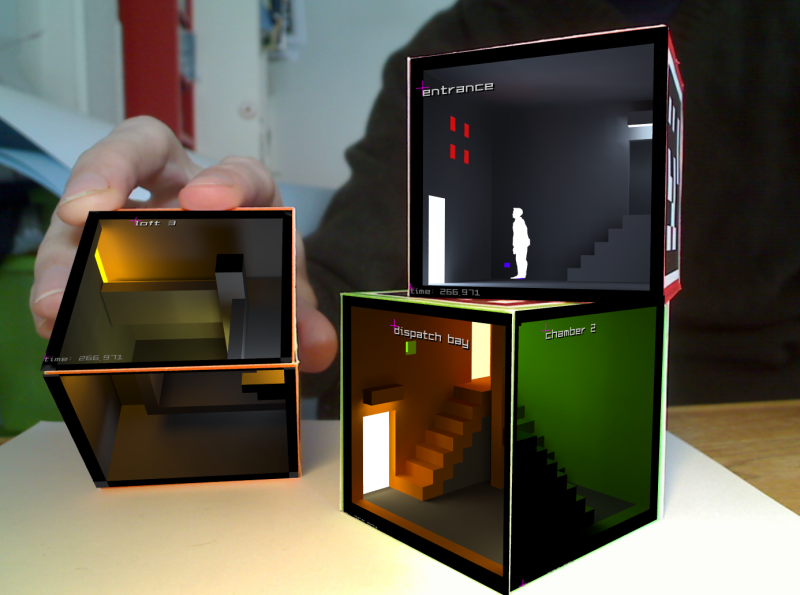
This, the first footage of the first stable version of <a href ="http://julianoliver.com/levelhead">levelHead</a>, was documented yesterday with a speed-run of 227 seconds ;) through the first 3 cubes.<br><br>
Aside from the above Vimeo documentation, you can download the 65M OGG/Theora file <a href = "http://selectparks.net/~julian/share/movies/levelHead-speedRun13.ogg">here</a>. It will play in <a href = "http://videolan.org">VLC</a>. <br><br>This video was made thanks to <a href = "http://blender.org">Blender</a>&#039;s great new video sequence editor (finally a fast and stable Free video editor for Linux) and captured using the strangely performant 3d desktop video capture solution for Linux <a href = "http://sourceforge.net/projects/bugle/">Bugle</a>. <br><br>For those of you keen to get your hands on the code: it&#039;s coming soon! I still need to tidy up the literature before it ships..
]]></description>
	</item>
	<item rdf:about="http://ljudmila.org/~julian/?entry=entry080707-145438">
		<title>anagram series: video documentation available.</title>
		<link>http://ljudmila.org/~julian/blog.php?entry=entry080707-145438</link>
		<description><![CDATA[<br>
<center><a href ="anagrams/"><img src = "images/anagram3-all-sml.png"></a></center><br>
I&#039;ve documented 2 &#039;software triptyches&#039; I made in 2006, and one I recently finished, <a href = "anagrams/"> here</a>. <br><br>Enjoy. ]]></description>
	</item>
	<item rdf:about="http://ljudmila.org/~julian/?entry=entry080619-165309">
		<title>prix ars 2008</title>
		<link>http://ljudmila.org/~julian/blog.php?entry=entry080619-165309</link>
		<description><![CDATA[<br><a href = "http://julianoliver.com/levelhead">levelHead</a> received an Honorary Mention in the <a href = "http://www.aec.at/de/prix/cat_interactive.asp">Interactive Arts</a> category at Ars Electronica this year. <br><br>Apparently it will also be on show at the Ars Electronica Centre in September.<br><br>Thankyou jury!]]></description>
	</item>
	<item rdf:about="http://ljudmila.org/~julian/?entry=entry080523-180044">
		<title>Interview in TAGMAG available for download</title>
		<link>http://ljudmila.org/~julian/blog.php?entry=entry080523-180044</link>
		<description><![CDATA[
<BR>
<center><a href ="http://tag004.nl/new/"><img src = "images/tagmag6.jpg"></a></center><br>
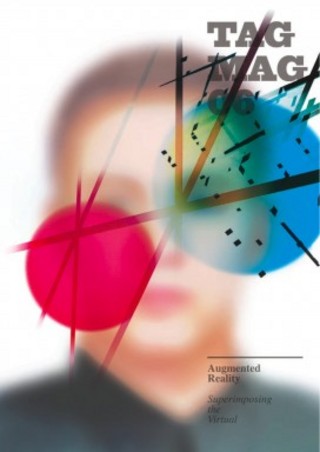
I recently gave an interview for TAGMAG 6 as part of their feature on Augmented Reality. It&#039;s quite an interesting issue surveying AR from a cultural, philosphical and artistic perspective.
<BR><BR>
Get it <a href ="http://www.tag004.nl/tagmag6/TAGMAG6.pdf">here</a>
<BR><BR>
If you&#039;re in Den Haag region come to <a href ="http://tag004.nl/new/">TAG<></a> and play the best version of <a href ="http://julianoliver.com/levelHead">levelHead</a> yet alongside some great work by other aritsts like Theo Watson and Jan Torpus.<BR><BR>

]]></description>
	</item>
	<item rdf:about="http://ljudmila.org/~julian/?entry=entry080421-174437">
		<title>levelHead at Homo Ludens Ludens. Day 2</title>
		<link>http://ljudmila.org/~julian/blog.php?entry=entry080421-174437</link>
		<description><![CDATA[<br>
<center><a href = "levelhead/images/exhibition-shots/hll-day2/"><img src = "levelhead/images/laboral-sunday.jpeg"></a></center><br><br>
As promised, <a href = "levelhead/images/exhibition-shots/hll-day2/">here&#039;s</a> a gallery of images of <a href ="http://julianoliver.com/levelhead">levelHead</a> in action on day 2 of <i>Homo Ludens Ludens</i>. As you can see they were taken by a far better photographer, utilizing a special feature of the camera known as &#039;autofocus&#039;.. 
]]></description>
	</item>
	<item rdf:about="http://ljudmila.org/~julian/?entry=entry080420-001300">
		<title>levelHead at Homo Ludens Ludens. Day 1</title>
		<link>http://ljudmila.org/~julian/blog.php?entry=entry080420-001300</link>
		<description><![CDATA[
<BR>
<center><img src = "levelhead/images/laboral-saturday-all.jpeg"></center>
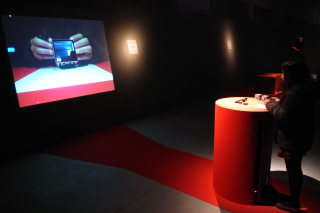
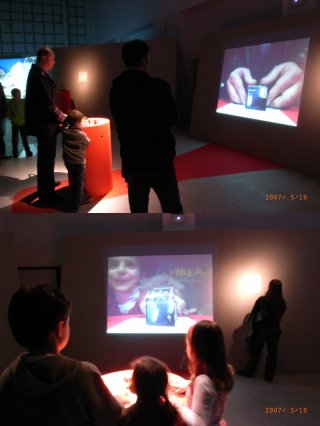
<BR><BR>Last night at the opening was the first time <a href ="http://julianoliver.com/levelhead">levelHead</a> has been seen in the wild. As such it&#039;s been extremely revealing watching people play it, something I&#039;ve done for a few hours today.  <br><br>The response has been very enthusiastic and almost all people seem to &#039;get&#039; the interface pretty much immediately (with the exception of one woman using the camera to explore her nostrils on the projection at a rather inopportune moment).<br><br> That aside I&#039;m surprised at the breadth of variance in the capacity of people to record and recall information about the room they were last in. Of the 50 or 60 people I watched play levelHead, I twice saw people demonstrate alien-savant powers in this regard, completing the first cube in under 2 minutes. Almost everyone I watched took their capacity to navigate effectively quite personally, even at times stopping to make mental notes before moving to a connecting room.<br><br>One thing I&#039;m greatly enjoying about this piece is the ever presence of hands, made gigantic, carefully holding the cube complete with little world inside.<BR><BR>Aside from changing all the in-game dialogues to Spanish, I&#039;m clear on the few tweaks I&#039;ll make for SonarMatica at Sonar08 in June. One thing is certain, the cubes will need to be an extremely durable plastic.
<BR><BR>
I&#039;ve uploaded a <a href ="http://selectparks.net/~julian/levelhead/images/exhibition-shots/hll-day1/">little gallery</a> of people playing on day 1 of <i>Homo Ludens Ludens</i>, one that expresses most of all just how little I understand our new Ricoh GR Digital camera (or perhaps photography in general). I&#039;ll make another one of people playing tomorrow on return home.
]]></description>
	</item>
	<item rdf:about="http://ljudmila.org/~julian/?entry=entry080414-125632">
		<title>levelHead developments</title>
		<link>http://ljudmila.org/~julian/blog.php?entry=entry080414-125632</link>
		<description><![CDATA[<br><br>
It&#039;s been a good couple of weeks working on <a href = "http://julianoliver.com/~julian/levelhead">levelHead</a>, in preparation for the <a href = "http://www.laboralcentrodearte.org/exhibitions/show/63">Homo Ludens Ludens</a> (aka "Man, the player") exhibition at <a href ="http://www.laboralcentrodearte.org/">LABoral</a>, Gijon, Asturias, Spain. <BR><BR>
The controls are far more robust and a great many bugs have been slayed (in a caring and respectful way). There are now 3 playable levels and a bunch of user-notications and other goodies that aid navigation. <br><br>
At the 11th hour <a href ="http://pix.test.at">pix</a> came on board to migrate the tracker from ARToolkit to ARToolkitPlus, which has worked splendidly: tracker stability is far better than it was with my previous ARToolkit implementation. 
<br><br>
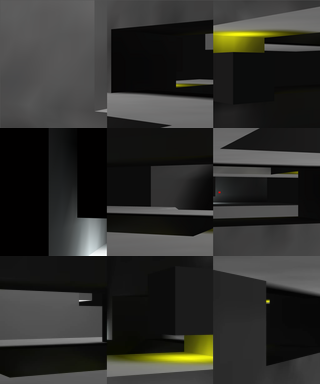
While working together he chose to go on a bug hunt, chasing in particular a graphic glitch where two rooms were being drawn at the same time. I&#039;d written the first version with the intention of just one room being drawn at a time (one marker to be tracked for simplicity) but with the aid of a stencil-buffer he managed to make the use of the likely occurence that two or even three rooms  can be seen at once:
<br><br>
<a href = "levelhead/images/lh-l1-l2-l3-4_sml.png"><center><img src ="levelhead/images/lh-l1-l2-l3-4_vsml.png"></center></a>.<br><br>
Development hasn&#039;t all been in code, I also have some lovely new cubes:<br><br>
<a href = "levelhead/images/final-cubes-hll.jpg"><center><img src ="levelhead/images/final-cubes-hll_vsml.jpg"></center></a><br><br>

So at the end of a fairly fierce two weeks of programming, levelHead is ready to be unleashed on the Asturians, where it will be installed for 5 months. For those that can&#039;t make it to Gijon, levelHead will next be exhibited at Sonar, Barcelona this year. <br><br>More about that later.
]]></description>
	</item>
	<item rdf:about="http://ljudmila.org/~julian/?entry=entry080314-180052">
		<title>Cartofictions: Inclusiva-Net keynote, 08.</title>
		<link>http://ljudmila.org/~julian/blog.php?entry=entry080314-180052</link>
		<description><![CDATA[

Here&#039;s a video of my <a href ="http://inclusiva-net.org/">Inclusiva-Net</a> Conference, <i>Cartofictions: Maps, The Imaginary and GeoSocial Engineering. </i><br><br>
It&#039;s around an hour long. Note that it has one or two mis-placed slides at around 34mins. This aside the editor did quite a good job.<br><br>
Abstract:<br><br><i>
From the earliest world maps to Google Earth, cartography has been a vital interface to the world. It guides our perceptions of what the world is and steers our actions in it. As our knowledge about the world has changed, so have maps with it (or so we like to think).<br><br>

In this lecture Julian shows a darker side of map-making, covering various reality-distorting effects innate to the graphic language of cartography and how they can be easily exploited for gain..

In doing so Julian positions cartography as an abstract and influentual creative practice, rich with the power to engineer political views, religious ideas and even the material world itself.</i>
<br><br>
Enjoy!

<center>
<object type="application/x-shockwave-flash" width="400" height="300" data="http://www.vimeo.com/moogaloop.swf?clip_id=784263&server=www.vimeo.com&fullscreen=1&show_title=1&show_byline=1&show_portrait=0&color=">	<param name="quality" value="best" />	<param name="allowfullscreen" value="true" />	<param name="scale" value="showAll" />	<param name="movie" value="http://www.vimeo.com/moogaloop.swf?clip_id=784263&server=www.vimeo.com&fullscreen=1&show_title=1&show_byline=1&show_portrait=0&color=" /></object><br /></center><a href="http://www.vimeo.com/784263/l:embed_784263">Cartofictions: Julian Oliver keynote, Inclusiva-Net, Madrid &#039;08</a> from <a href="http://www.vimeo.com/user401198/l:embed_784263">Julian Oliver</a> on <a href="http://vimeo.com/l:embed_784263">Vimeo</a>.<br><br>
Be sure to check out some of the <a href= "http://www.inclusiva-net.es/">excellent projects</a> that came out of Inclusiva-Net this year - super stuff ppl, it was a pleasure <strike>teaching</strike> working with you all. <BR><BR>Big thanks to the <a href= "http://medialab-prado.es/">Medialab-prado</a> team for making it all happen.
]]></description>
	</item>
	<item rdf:about="http://ljudmila.org/~julian/?entry=entry080228-202938">
		<title>Perceptual Play: Optical Illusion Art as Radical Interface</title>
		<link>http://ljudmila.org/~julian/blog.php?entry=entry080228-202938</link>
		<description><![CDATA[<BR>.. that&#039;s the name of my latest paper, prepared for the <a href ="http://www2.laboralcentrodearte.org/seminarios/proximos/3">Homo Ludens Ludens</a> conference at <a href ="http://www2.laboralcentrodearte.org/">Laboral</a>, Gijon, Spain in mid April. It&#039;ll be published in the symposium book alongside the work of <a href = "http://www2.laboralcentrodearte.org/seminarios/proximos/3?contenido_id=65">this  esteemed bunch</a>. <BR><BR><a href ="http://selectparks.net/~julian/share/text/Oliver_Optical-Illusion-Art-as-Radical-Interface.pdf">Download it here.</a> You&#039;re free to reproduce and distribute it under the terms of the Creative Commons Attribution 2.0 License. <BR><BR>
Out of interest I&#039;d prefer to use a license like the <a href = "http://www.gnu.org/licenses/fdl.html">GNU Free Documentation License</a> for my papers but I can&#039;t find anything that comes close while remaining suitable to theory.<BR><BR>
If you have any ideas I&#039;d be glad to have an email from you. </a>]]></description>
	</item>
	<item rdf:about="http://ljudmila.org/~julian/?entry=entry080206-225441">
		<title>first artvertiser tech demos</title>
		<link>http://ljudmila.org/~julian/blog.php?entry=entry080206-225441</link>
		<description><![CDATA[<BR>
More <a href ="theartvertiser/">Artvertising</a>.. <BR><BR>
<center><img src = "theartvertiser/images/your-art-here.png"></center><BR><BR>

The below two videos show basic live image substitution of a postcard, seen by my webcam. 

<BR><BR><a href ="theartvertiser/movies/artvert-movie.avi">This clip</a> demonstrates playing a movie &#039;on&#039; the  postcard and <a href ="theartvertiser/movies/artvert-postcard.avi">this video</a> demonstrates cycling through a variety of images while attempting to emulate the local lighting conditions. 
 <BR><BR>It&#039;s still not as stable as I&#039;d like but nonetheless it&#039;s getting there.<BR><BR>
The idea, of course, isn&#039;t to substitute images on arbitrary postcards but on big billboards, bus-stops and sign advertising in cities. I do have a clip of a substitution of a road-side sign but it&#039;s a bit rubbish due to it being quite dark at the time.<BR><BR>

As opposed to (most) other augmented reality  techniques - which use specially designed black-and-white fiducial markers - here the image itself is the marker.. This is much more processor intensive than normal marker tracking.
<BR><BR>Naturally I&#039;d love to see this working on a mobile phone but having played with a Nokia N95 recently - perhaps the best-specc&#039;d phone for this sort of work - it&#039;s clear that fast image detection is well beyond the scope of current phone hardware; at least at more than a few frames a second. That&#039;s not to say standard augmentation using fiducial markers doesn&#039;t work fine on such a phone (like those used with ARToolkitPlus)..<BR><BR>Nonetheless, a UMPC built into a pair of binoculars is probably a bit more fun out on the field anyway.]]></description>
	</item>
	<item rdf:about="http://ljudmila.org/~julian/?entry=entry080123-155728">
		<title>Announcing new project: The Artvertiser</title>
		<link>http://ljudmila.org/~julian/blog.php?entry=entry080123-155728</link>
		<description><![CDATA[
<br><br>
<a href = "http://selectparks.net/~julian/theartvertiser/"><center><img src = "theartvertiser/images/artvertiser-banner_medium.png" border="1"></center></a><br><br>

This is a project I&#039;ve been dreaming up for a while. Only until recently however have developments in both computer vision and mobile hardware platforms made it possible to produce.<BR><BR>
Here&#039;s the blurb:<BR><BR>
<i>
The Artvertiser is a computer vision project exploring live, locational substitution of advertising content for the purposes of exhibiting digital artwork.
<br><br>
The Artvertiser takes Puerta del Sol Madrid, Times Square New York, Shibuya Tokyo and other sites dense with advertisements as exhibition space. The Artvertiser is an instrument of conversion and reclamation, taking imagery seen by millions and re-purposing it as a surface for presentation of art.
<br><br>
By &#039;training&#039; a computer to recognize billboard advertisements, logos and other images of commerce, that content can then be &#039;replaced&#039; with alternative material when seen through a specially engineered digital video device. If an internet connection is present at the site, it can be documented and published in on line galleries such as Flickr and YouTube.
</i><BR><BR>
So far the software component is coming along well. It is already possible to perform live substitution of billboards with images, 3D models or movies when seen through a sufficiently good camera. To get this far I&#039;ve written a C++ application ontop of the excellent image tracking library <a href ="http://cvlab.epfl.ch/software/bazar/">Bazar</a> that supports substituting the detected image with an OpenGL surface upon which I can draw video (live or from file) or static imagery.<BR><BR> Working with <a href = "http://lalalab.org">Clara Boj and Diego Diaz</a> - also competent practitioners in Augmented Reality - I hope we can add a network component such that when an &#039;artvert&#039; is seen in the wild it can be published to Flickr and/or filmed and uploaded to YouTube and similar video hosting services.<BR><BR>
Soon I hope to upload videos of early trials of the system out in the wild.]]></description>
	</item>
	<item rdf:about="http://ljudmila.org/~julian/?entry=entry080101-184111">
		<title>Fijuu2 published in Chinese Art+Sci publication.</title>
		<link>http://ljudmila.org/~julian/blog.php?entry=entry080101-184111</link>
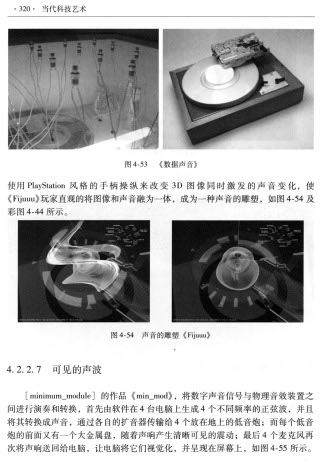
		<description><![CDATA[
Name:   Contemporary Art of Science and Technology<BR>
ISBN:        978-7-03-020415-8<BR>
Press name:  Science Press<BR>
Language:      Chinese<BR>
660 pages (62 pages in color)<BR><BR>
We&#039;re on pages 319 and 320 next to a couple of great works. Here&#039;s a scan the editor was kind enough to send us: <BR><BR>
<center><img src = "images/cn-sci-tech_fijuu2-sml.jpg"></center><BR><BR>.. and here&#039;s a scan of the cover: <BR><BR><center><img src ="images/cn_sci-tech-cover2-sml.gif"></center>
<br /><br />]]></description>
	</item>
	<item rdf:about="http://ljudmila.org/~julian/?entry=entry071216-153138">
		<title>Streaming video-textures with OpenGL and OpenCV</title>
		<link>http://ljudmila.org/~julian/blog.php?entry=entry071216-153138</link>
		<description><![CDATA[I recently spent some time looking around the hinternets for a simple method to stream live video, captured using OpenCV, from a webcam or firewire camera, to textures on one or more OpenGL polygons, windowed with something light like GLUT. Having found nothing that acheives this, and seeing that lots of people were trying, I wrote a program in C that does.
<BR><BR>
Why OpenCV? OpenCV offers advanced texture processing and analysis: being able to find natural features in images on OpenGL surfaces offers up many interesting possibilities.
<BR><BR>
The trick was just to pass correctly scaled (power of 2), captured IplImage data to glTexSubImage2D every frame. It needed to be correctly formatted and bound beforehand.
<BR><BR>
Get the source code <a href = "http://selectparks.net/~julian/share/code/OpenCV_GL.c">here</a>, licensed under the <a href ="http://www.gnu.org/copyleft/gpl.html">GPLv3</a>. It will compile on a Linux system. <a href = "http://sourceforge.net/projects/opencvlibrary/">OpenCV</a>, <a href ="http://freeglut.sourceforge.net/">FreeGlut</a> and <a href ="http://www.opengl.org/">OpenGL</a> are needed. You&#039;ll need hardware accelerated 3D too..<BR><BR>
Enjoy!
]]></description>
	</item>
	<item rdf:about="http://ljudmila.org/~julian/?entry=entry071209-124954">
		<title>q3apd 06 Installation documentation archived</title>
		<link>http://ljudmila.org/~julian/blog.php?entry=entry071209-124954</link>
		<description><![CDATA[
<br>
<center><img src = "q3apd/images/q3apd_lovebytes06-1.jpeg"></center><br><br>
The q3apd project has been properly archived, with the inclusion of the LoveBytes06 Festival video documentation and galleries, <a href ="http://selectparks.net/~julian/q3apd">here</a>.
]]></description>
	</item>
	<item rdf:about="http://ljudmila.org/~julian/?entry=entry071207-143730">
		<title>Artist of the month</title>
		<link>http://ljudmila.org/~julian/blog.php?entry=entry071207-143730</link>
		<description><![CDATA[
<a href= "http://hyperform.dk">Hyperform Net Gallery</a> has been kind enough to make me Artist of the Month for December 07, focussing on <a href= "http://julianoliver.com/levelead">levelHead</a>. <BR><BR>Big thanks to all those involved at Hyperform.
]]></description>
	</item>
	<item rdf:about="http://ljudmila.org/~julian/?entry=entry071207-103500">
		<title>Jean Poole writes on my work</title>
		<link>http://ljudmila.org/~julian/blog.php?entry=entry071207-103500</link>
		<description><![CDATA[
<a href = "http://www.skynoise.net/">Jean Poole</a> was commissioned by <a href = "http://www.arnolfini.org.uk/">Arnolfini</a> to write on one or two  aspects of my work over the years. <a href = "http://www.skynoise.net/2007/12/07/julian-oliver-the-art-of-gardening">Here&#039;s the text</a>. 
<BR><BR>
Thankyou Jean! 
<br />]]></description>
	</item>
	<item rdf:about="http://ljudmila.org/~julian/?entry=entry071110-165512">
		<title>Blender Manual: Modeling to Rendering</title>
		<link>http://ljudmila.org/~julian/blog.php?entry=entry071110-165512</link>
		<description><![CDATA[ 
<br />
<a href="http://en.flossmanuals.net/blender">Here&#039;s a manual</a> I wrote introducing the basics of modeling, texturing and rendering using the excellent open-source software <a href="http://blender.org">Blender</a> for the <a href="http://flossmanuals.net">FLOSSManuals</a> project. <br />
 <br />
 
Later on I&#039;ll post a section on the Realtime Game Engine part of Blender toward the ends of rapidly prototyping game/3D interface ideas. <BR><BR>If you&#039;re interested in translating this manual into languages other than Dutch (<a href ="http://www.lowstandart.net/">Walter Langelaar</a> is working on that) pls get in touch!<br />
 <br />
 ]]></description>
	</item>
	<item rdf:about="http://ljudmila.org/~julian/?entry=entry071015-182557">
		<title>levelhead: first beta footage.</title>
		<link>http://ljudmila.org/~julian/blog.php?entry=entry071015-182557</link>
		<description><![CDATA[<br>
<a href ="http://selectparks.net/~julian/levelhead"><center><img src = "http://selectparks.net/~julian/levelhead/images/levelHead-title_sml.gif" align="center" border="0"></center></a><br><br>


I&#039;ve just finished the first beta (really an alpha) of my little AR/tangible-interface game levelHead. Admittedly there&#039;s not much up on the <a href ="http://julianoliver.com/levelhead">project page</a> yet, but <a href ="http://www.youtube.com/watch?v=5ks1u0A8xdU">here&#039;s a YouTube video</a> that conveys the general idea pretty well. It still has glitches but i&#039;ll iron those out soon enough. <BR><BR>At some point i also want to look into the idea of using invisible markers (have a few promising possibilities there) or full colour picture markers (also possible, though requires much more CPU braun).
<br><br>
<center><a href ="http://www.youtube.com/watch?v=5ks1u0A8xdU"><img src = "http://selectparks.net/~julian/levelhead/images/levelHead-srn2.png" border="1"></a></center><br><br>
<a href = "http://selectparks.net/~julian/share/movies/levelHead_12-10-07.ogg">Here&#039;s a better quality video</a> in the OGG/Theora format (plays in VLC). 
<br><br>
Enjoy.
<br /><br />]]></description>
	</item>
	<item rdf:about="http://ljudmila.org/~julian/?entry=entry070802-180922">
		<title>PacketGarden for Ubuntu 7.04</title>
		<link>http://ljudmila.org/~julian/blog.php?entry=entry070802-180922</link>
		<description><![CDATA[<BR><a href ="http://selectparks.net/~julian/pg/dists/linux/ubuntu/feisty/">Here are</a> packages of <a href = "http://packetgarden.com"> Packet Garden</a> for <a href = "http://ubuntu.com">Ubuntu 7.04</a>. <BR><BR>
To install just download, double-click and go. You might want to install dpkt and pycap first (also found at the above link).]]></description>
	</item>
	<item rdf:about="http://ljudmila.org/~julian/?entry=entry070731-115128">
		<title>schiele redux</title>
		<link>http://ljudmila.org/~julian/blog.php?entry=entry070731-115128</link>
		<description><![CDATA[<BR>
<center><a href = "schiele_redux"><img src = "schiele_redux/6-sml.gif" border="1"></a></center>
]]></description>
	</item>
	<item rdf:about="http://ljudmila.org/~julian/?entry=entry070731-113723">
		<title>fun with beep.</title>
		<link>http://ljudmila.org/~julian/blog.php?entry=entry070731-113723</link>
		<description><![CDATA[<b>Dilemma</b>: Hotel in foreign country and must wake up very early. Phone critically low on battery, charger missing, hotelier appears to be asleep and no alarm clock in sight. Very tired,  reasonably inebriated.<br /><br /><b>Fix</b>: Write a script that emulates the sound of my phone&#039;s alarm before passing out:<br /><pre><br /># simple alarm script.<br /># requires the program &#039;beep&#039;<br /># turn up your PC speaker volume and use as follows:<br /># &#039;python alarm.py HH:MM&#039;<br />import time<br />import sys<br />import os<br />wakeTime = sys.argv[1].split(&#039;:&#039;)<br />while 1:<br />  time.sleep(1)<br />  if time.localtime()[3] &gt;= int(wakeTime[0]):<br />    if time.localtime()[4] &gt;= int(wakeTime[1]):<br />      os.popen(&#039;beep -l 40 -f 2000 -n -l 40 -f 10000 -n -l 40 -f 2000&#039;)<br /></pre>]]></description>
	</item>
	<item rdf:about="http://ljudmila.org/~julian/?entry=entry070618-155607">
		<title>Unprepared Architecture at Interactivos</title>
		<link>http://ljudmila.org/~julian/blog.php?entry=entry070618-155607</link>
		<description><![CDATA[
Aside from moving country I&#039;ve just finished developing a project at <a hre
f ="http://www.interactivos.org/">Interactivos</a> at the excellent <a href 
="http://www.medialabmadrid.org/">Media Lab Madrid</a>. I tried to spend as 
much time as possible there but alas had chores like setting up a new apartment. Nonetheless I had a lot of fun. 
<BR><BR>
<a href ="http://simonejones.com">Simone Jones</a> was one of the instructors - someone who has a great deal of experience with electronics, especially in the context of motorised cameras. Because my previously offered project proved to be unfeasible in the time frame and Simone wanted to work on something, we decided to team up.
<BR><BR>
We threw around several ideas, mostly to do with &#039;editing&#039; the existing architecture of the exhibition space by adding an extra room seen only through a CCTV like display - a kind of a haunting. However, as the lighting conditions of the space were changing so frequently in the days leading up to the group-show, we couldn&#039;t pull this off. For this reason we decided to work small - really small.<BR><BR>
<center><a href = "http://selectparks.net/~julian/share/movies/u-a_09-06-07.ogg"<img src = "http://selectparks.net/~julian/images/u-a3.png"></a></center>
<BR><BR>
The idea was simple, augment a solid cube with 6 little rooms such that the cube becomes a tangible interface for navigating through an architecture: a mind-game - "How are the rooms connected?"<BR><BR>
I added some code to ARToolkit so that it could support occlusion - ie hiding virtual objects &#039;behind&#039;, or &#039;inside&#039;, real objects and used a simple mask object to aid the process.<BR><BR>
<a href = "http://selectparks.net/~julian/share/movies/u-a_09-06-07.ogg">Here&#039;s a little clip</a> in the OGG Theora format (plays in <a href ="http://videolan.org">VLC</a>) that perhaps better explains it all.<BR><BR>
Simone and I are already talking about a large version of this for a later show. In the meantime I&#039;m adapting it into a small game where you must help a character to escape the block by leading it from room to room: by turning the cube you select the next room the character will enter. Several cubes can be used so that when a character is finally led to the exit door of one cube it will jump to the entrance of another cube (or &#039;level&#039;) placed nearby. I plan to make this puzzle game around 5 cubes long. More about that later..
<BR><BR>
The exhibition uses a Sony EyeToy on an Ubuntu Linux system. Worth mentioning is that I used the super <a href ="http://w
ww.rastageeks.org/ov51x-jpeg/index.php/Main_Page"> Rastageeks OV51x-JPEG drivers</a>: a 640x480 webcam on Linux for less than EUR40? Look no further!<BR><BR>
<b>Addendum 19-06-07</b> For a long list of reasons I have never found character animation a very satisfying task - probably due to me being quite horrible at it. For this reason I&#039;m very open to collaborating with a good character animator on this project. The data needs to come from Blender via the osgCal3D exporter (shipped with recent versions of Blender).. Get in touch we me by interpreting <a href ="http://selectparks.net/~julian/static.php?page=contact">this image.</a>
]]></description>
	</item>
	<item rdf:about="http://ljudmila.org/~julian/?entry=entry070520-185233">
		<title>parallel universe sim gaming</title>
		<link>http://ljudmila.org/~julian/blog.php?entry=entry070520-185233</link>
		<description><![CDATA[In the last few years quantum physicists and mathematicians have told us there may well be ground to the old &quot;many worlds&quot; theory - that there might be several different versions of any given dimension, or groups of dimensions, at the same time. Hugh Everett III is perhaps the most well known proponent of this theory.<br /><br />Perhaps a many worlds gaming system would involve several players with the task of governing one simulated world each. Each world starts out with an equal number of objects and agents all of which begin as perfect temporal copies of the next. Gameplay might involve triggering/steering chains of events to the ends of creating the least synchronous world - ie. sequences of highly unlikely events. The world with the least eventful similarity within a given period of time will create a branch, and that player wins. At the point of a branch, identical copies are made and the game begins again, continuing from the point of that new branch.<br /><br />Perhaps the notion of &#039;entanglement&#039; could also be used as a strategic means of playing great similarity to an advantage: by successfully mirroring an event in another player&#039;s world entanglement could be triggered, giving the antagonist brief remote control over events therein.<br /><br />While it could easily take on the form of a 2d game or orthographic sim-like title (like Habbo Hotel) the real work would be in creating a procedural event modeling system with an internal sense of consequence and wide potential for very absurd outcomes. Scenarios for an opening game need not be large at all - ordering a falafel or getting a haircut could give plenty of material to begin with.<br /><br /><b>12-05-07</b> Updated for clarity.]]></description>
	</item>
	<item rdf:about="http://ljudmila.org/~julian/?entry=entry070505-143000">
		<title>2ndPS2: Second Person Shooter (for 2 players)</title>
		<link>http://ljudmila.org/~julian/blog.php?entry=entry070505-143000</link>
		<description><![CDATA[
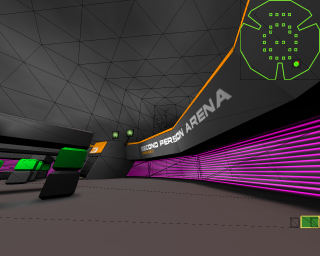
Any time I had leading up to <a href ="http://selectparks.net/modules.php?name=News&file=article&sid=637">Gameworld</a> was spent working on 2ndPS2 (read Second Person Shooter for 2-players). I&#039;d been meaning to make this little mod for years and decided that Gameworld was as good an opportunity as any to put the idea to the test.<BR><BR>

Unlike the <a href ="http://www.selectparks.net/modules.php?name=News&file=article&sid=284">previous incarnation</a> - a simple <i>prototype</i> written in Blender that <a href ="http://www.eurogamer.net/article.php?article_id=60481">far</a> <a href = "http://www.gamasutra.com/php-bin/column_index.php?story=6228">too</a> <a href = "http://kotaku.com/gaming/art/second+person-shooter-116960.php">many</a> people got excited about - your views are switched with another player, not a bot. You are looking through their view and you through theirs. When they press the key for forward on the computer, the view you&#039;re looking through responds accordingly, and vice versa. As it&#039;s all networked it&#039;s possible to play over the internet just as you would a normal multiplayer Quake3 game.
<BR><BR>
Naturally this makes it very tricky to actually play the thing as you can only navigate yourself with effect when you can see yourself: ie. you are within view of your opponent&#039;s gaze. In the few tests I did of 2ndPS2 before putting it on show people with no experience playing first-person-shooter games struggled with this reversal of the control paradigm very much, and so at the advice of <a href = "http://lapetiteclaudine.com">Marta</a> I built a sort of visual radar system so you could see where the other player was and vice versa. 
<BR><BR>
<center><img src = "images/projects/2ndPS2/2ndPS2-1.png"></center>
<BR><BR>
This worked really well as far as reducing the confusion people would&#039;ve had otherwise: in an exhibition context of the scale of Laboral people have very short attention spans and so a bang-for-buck approach like this was perhaps necessary. In practice it actually stood up reasonably well to these ends.
<BR><BR>
Conceptually however using this radar-helper is a bit of a compromise: why switch the views at all if you&#039;re providing a means for people to avoid engaging with a primary dislocation of perspective as an active part of the interface? <BR><BR>
With this in mind I&#039;ve decided to replace the visual radar with a sound-based system. You can hear where you are in the scene in relation to the view of your opponent - the view you&#039;re looking through. Events like walking into walls and picking up items are distinct sound events. The orientation of yourself out there in the scene is represented as changes to the pitch and harmonics of a continuous signal. 
<BR><BR>
While I already had much of this auditory feedback system already implemented I didn&#039;t use it at Laboral as it was far from ready for use.
<BR><BR>

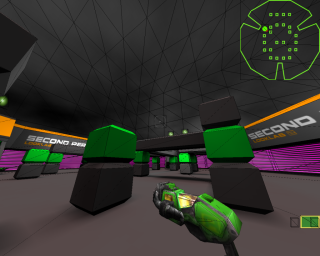
I used <a href ="http://ioquake3.org/">ioquake3</a> to make 2ndPS2, spending a fair bit of time coming up with new rendering effects, sprites, weapons and other bits and bobs simply because I can&#039;t help myself when I have the source code in front of me (ahh the Garden Paths). Admittedly I could&#039;ve simply taken a stock Quake3 map and consdered this strictly as a conceptual piece, but when I started this I had the distinct feeling that I was beginning something much larger. Perhaps this is still the case.
<BR><BR>

<center><img src = "images/projects/2ndPS2/2ndPS2-4.png"></center><BR><BR>

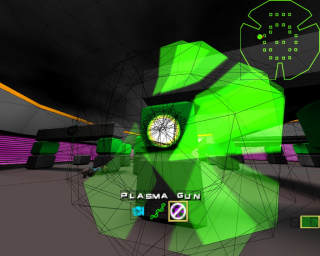
Where to from here? Perhaps a mod that allows many people to play simultaneously; a hoppable second-person view matrix allowing you to change to any view other than your own. There would be a strategic component where views themselves are resources that need to be managed toward the ends of finding yourself in the arena long enough to gain control, bumping others over to a new view as required. Weapons could include a POV-grenade that shuffles all the current views of players within impact range. FOV-weapons (i&#039;ve already made a couple) that suddenly throw the target into orthogonal views or warp the current camera as though the world were a rippling surface. 
<BR><BR>
This sort of stuff I wanted to save for another project entirely - a strategic multiplayer game where by you must find your first-person view in a large architecturally distributed view matrix - but <a href = "http://eddostern.com">Eddo</a> suggested it would probably make a pretty nice addition to 2ndPS2. 
<BR><BR>
<center><img src = "images/projects/2ndPS2/2ndPS2-2.png"></center>
<BR><BR>
Perhaps I will do this.. I&#039;m always open to other suggestions and even collaborations. 
<br />]]></description>
	</item>
	<item rdf:about="http://ljudmila.org/~julian/?entry=entry070408-035654">
		<title>more ioq3apaint</title>
		<link>http://ljudmila.org/~julian/blog.php?entry=entry070408-035654</link>
		<description><![CDATA[<br>
Here are a few galleries, broken up into categories based on when the images were taken during the cycle of action. I think what&#039;s in here is a little more interesting than what&#039;s seen in the earlier video as it also gives coverage of some live palette manipulation.<BR><BR>
<a href = "http://selectparks.net/~julian/images/projects/ioq3apaint/galleries/beginnings/">beginnings</a>
<br><br>
<a href = "http://selectparks.net/~julian/images/projects/ioq3apaint/galleries/fields">fields</a>
<br><br>
<a href = "http://selectparks.net/~julian/images/projects/ioq3apaint/galleries/instants">instants</a>
<br><br>
<a href = "http://selectparks.net/~julian/images/projects/ioq3apaint/galleries/endings">endings</a>
<br /><br />]]></description>
	</item>
	<item rdf:about="http://ljudmila.org/~julian/?entry=entry070319-232311">
		<title>residency at Georgia Tech: ioq3aPaint</title>
		<link>http://ljudmila.org/~julian/blog.php?entry=entry070319-232311</link>
		<description><![CDATA[The piece I made while serving as Artist in Residence at Georgia Tech finally concluded to be &#039;ioq3aPaint&#039;; an automatic painting mechanism using QuakeIII where software agents in perpetual combat drag texture data as they fight, rendering attack vectors as graphic gesture. Here&#039;s a short clip (64M, 4"50&#039;, Ogg Theora) of one of the many iterations. It will play in <a href ="http://videolan.org">VLC</a>:<BR><BR>
<center><a href ="share/movies/ioq3aPaint_16-03-07.ogg"<img src = "images/ioq3aPaint.png"></a></center><br><br>
The exhibition was breif but the opening night and talk brought many thoughtful questions. Game designer and theorist <a href ="http://www.michaelnitsche.net/">Michael Nitsche</a> was responsible for alot of great commentary, some of which he <a href ="http://gtmachinimablog.lcc.gatech.edu/?p=20">wrote about here</a>.<BR><BR>ioq3aPaint develops upon <a href = "http://www.selectparks.net/~julian/images/q3apaint/page020.html">q3aPaint</a> quite heavily, introducing a fresh palette and providing audiences with the ability to cycle through palettes in real time.<BR><BR>
Not far off is the ability to send screenshots straight to a printer; the idea being that on the opening night of a future exhibition audience could take screenshots while the abstractions evolve which are in turn sent off to a large format canvas printer. The show itself would continue the following day as a normal painting exhbition.<BR><BR>
If you&#039;re interested in playing around with QuakeIII as a painting tool you can get fairly far working only in the console. Play with <code>r_fov</code>, <code>r_drawWorld</code> and <code>r_showTris</code> especially once you&#039;ve &#039;team s&#039; and there are a few bots in the scene. Therein start manipulating GL functions in <code>code/render/</code> and drive them by adding new keybinds to <code>code/client/cl_input.c</code>.<BR><BR>
A big thanks to all those in the LCC department for making it happen - an extra special thanks to <a href ="http://www.cpandfriends.com/">Celia Pearce</a> for setting up the initiative in the first place. Celia is one of the few people really pushing experimental game development practices in both institutional and industry contexts, and has been doing so for some years. Cheers to that.
]]></description>
	</item>
	<item rdf:about="http://ljudmila.org/~julian/?entry=entry070317-020540">
		<title>Fijuu2 interaction demonstration uploaded</title>
		<link>http://ljudmila.org/~julian/blog.php?entry=entry070317-020540</link>
		<description><![CDATA[<BR>
<center><a href = "share/movies/fijuu2_int-demo"<img src = "images/fijuu2-demo.png" border="1"></a></center><BR>
while teaching at Georgia Tech i&#039;ve been in the company of some big screens, so i took the opportunity to film a long overdue clip of Fijuu2 in use.
<BR><BR>
we&#039;d hoped for an inset of the gamepad but i didn&#039;t have access to two cameras at the time. regardless, this clip should explain what it&#039;s all about.
<BR><BR>
get it <a href = "share/movies/fijuu2_int-demo">here</a>. It&#039;s in the Ogg Theora format. If you don&#039;t know what that is, just use <a href = "http://videolan.org">VLC</a>.<br /><br />]]></description>
	</item>
	<item rdf:about="http://ljudmila.org/~julian/?entry=entry070303-213059">
		<title>wiimote --&gt; OSC --&gt; Blender</title>
		<link>http://ljudmila.org/~julian/blog.php?entry=entry070303-213059</link>
		<description><![CDATA[<br>

<a href ="http://selectparks.net/~julian/images/projects/wiiOSC-all.png">
<img src = "http://selectparks.net/~julian/images/projects/wiiOSC-sml.png"  align="left"></a>
While here at Georgia Tech I&#039;m giving a class on the development of &#039;expressive games&#039;, and for the purpose I chose Nintendo Wiimotes as the control context for class designs. The final projects will be produced in Blender, using the Blender game engine. 
<br><br>
Only having Windows machines at my disposal I wrote a basic Python script that exposes acceleromoter, tilt and button events from GlovePIE over <a href ="http://www.cnmat.berkeley.edu/OpenSoundControl/">Open Sound Control</a> (which is natively supported by that application) to the realtime engine of <a href ="http://blender.org">Blender</a>. I decided to go this way rather that create a bluetooth interface inside Blender for two reasons: GlovePIE is a great environment for building useful control models from raw input, it supports the <i>network capable</i> protocol OSC and I wanted to keep input-server like code out of Blender (for reasons you&#039;d understand if you used Python in Blender).<BR><BR>
<a href ="http://carl.kenner.googlepages.com/glovepie_download">GlovePIE</a> however is more than I need on Linux alongwith the fact I don&#039;t have a Windows machine near me most of the time. I looked into various options for getting control data from a few different &#039;drivers&#039; out over OSC and into Blender. Preferring to work in Python, I tried <a href ="http://www.forthewiin.org/">WMD</a> but found it too awkward to develop with, although it is nothing short of comprehensive. I finally settled on the very neatly written (Linux only) <a href = "http://libwiimote.sourceforge.net/">libwiimote</a> and wrote a simple little application in C to provide what I need. Here it is, <a href ="http://selectparks.net/~julian/share/blender/blender-resources/wiiOSC/wiiOSC-1.0.tar.gz">wiiOSC</a>. <BR><BR>
To run it on your system you&#039;ll need <a href ="http://libwiimote.sourceforge.net/">libwiimote</a>, Steve Harris&#039;s lightweight OSC implementation <a href ="http://liblo.sourceforge.net/">liblo</a>, a bluetooth dongle (of course) and a bluetooth support in your kernel (most modern distro&#039;s support popular bt dongles out-of-the-box). wiiOSC will send everything libwiimote supports (IR, accelerometer, tilt, button events etc) to any computer you specify, whether to 127.0.0.1 or a machine on the internet.<BR><BR>wiiOSC is invoked as follows:<br><br><code>
wiiOSC MAC remote_host port
</code><br><br>
For instance, to send wiimote data to a machine with the IP 192.168.1.102 on port 4950, I:<BR><BR>
<code>
wiiOSC 00:19:1D:2C:31:E1 192.168.1.102 4950
</code><br><br>
To get the MAC addr of your wiimote, just use <code>hcitool scan</code>.
I use Blender as my listener context but you can pickup the wiimote data in any application that supports it of course, PureData, Veejay etc. To use Blender as your listener you&#039;ll need <a href ="http://wiretap.stetson.edu/downloads/kits/pyKit.tar.gz">Wiretap&#039;s Python OSC</a> implementation and <a href = "http://selectparks.net/~julian/share/blender/blender-resources/wiiOSC/wiimote.blend">this Blender file</a>.<BR><BR>
Enjoy.]]></description>
	</item>
	<item rdf:about="http://ljudmila.org/~julian/?entry=entry070206-020024">
		<title>Packet capture collate to log</title>
		<link>http://ljudmila.org/~julian/blog.php?entry=entry070206-020024</link>
		<description><![CDATA[<br>
I&#039;ve picked out the packet capture part of PG and turned it into a reasonably useful and lightweight logger that should run on any UNIX system (tested on Linux). Packet length, remote IP, transaction direction, Country Code and port are all logged. Packet lengths are added over time, so you see an accumulation of traffic per IP.
<br><br>
Use (as root):
<br><br>
<code>./pcap_collate &lt;DEVICE&gt; &lt;PATH&gt;</code><br><br>
This script will capture, log and collate TCP and UDP packets 
going over &lt;DEVICE&gt; (eth0, eth1 etc). 
the &lt;PATH&gt; argument sets the location the resulting GZIPped log
will be written to, which will be updated every 1000 packets.
<br><br>
For this reason the script will automatically generate a new 
log on a new day and can be restarted at any time without losing 
more than 1000 packets of traffic.
<br><br> 
The log is a dump of the dict containing comma separated fields structured as follows:
<br><br>
<code>IP, direction, port, geo, length</code><br><br>
It will filter out all the packets on the local network, and 
so is intended for use in recording Internet traffic going over a single host.
<br><br>
Ports to be filtered for can be set in the file config/filter.config
<br><br>
Stop capture with the script &#039;stop_capture&#039;.<br><br>
Get it <a href = "http://selectparks.net/~julian/share/pcap_collate.tar.gz">here</a>. Unpack and see the file README.txt.
]]></description>
	</item>
	<item rdf:about="http://ljudmila.org/~julian/?entry=entry070202-210936">
		<title>Chess, The Music.</title>
		<link>http://ljudmila.org/~julian/blog.php?entry=entry070202-210936</link>
		<description><![CDATA[<center><img src = "images/projects/chess-the-music-4-sml.jpeg"></center><BR><BR>
Two new projects are in the wings, the first of which I&#039;ll announce now.<BR><BR>
This project takes a wooden chess-board and repurposes it as a musical pattern sequencer, where chess pieces in the course of a game define when and which notes will be played. 
<BR><BR>Each side has a different timbre to be easily distinguisable from the other. Pawns have different sounds than bishops, which in turn have different sounds than knights, and so on.<BR><BR>
As the game progresses and pieces are removed, the score increasingly simplifies. <BR><BR>It&#039;ll be developed at <a href = "http://www.pickledfeet.com/">Pickled Feet</a> laboratories with the eminent micro-CPU expert <a href = "http://www.1010.co.uk/">Martin Howser</a>.<br><br>]]></description>
	</item>
	<item rdf:about="http://ljudmila.org/~julian/?entry=entry070201-180025">
		<title>Packet Garden  1.0 released for Linux, Windows and OS X</title>
		<link>http://ljudmila.org/~julian/blog.php?entry=entry070201-180025</link>
		<description><![CDATA[
After several months hacking on this, I&#039;ve finally released PG for all three platforms simultaneously. It&#039;s now considered &#039;stable&#039;. Head over the <a href="http://packetgarden.com">http://packetgarden.com</a> and take it for a ride.<br />  <br />  A big thanks to: <a rel="nofollow" href="http://shiny.thorne.id.au/" class="urllink">Jerub</a> for detailed testing of the OS X PPC port, <a rel="nofollow" href="mailto:marmoute@free.fr"> Marmoute</a> for the OSX PPC package, Ababab for providing PPPoE test packets and extensive beta testing of the Windows port and for his feature suggestions, <a rel="nofollow" href="http://www.geekwishlist.net/" class="urllink">Davman</a> for beta testing the Windows port and for some fine feature requests, <a rel="nofollow" href="http://draconislabs.net/main.php" class="urllink">Krishean Draconis</a> for porting/compiling Python GeoIP for Windows, <a rel="nofollow" href="http://pix.test.at/" class="urllink">pix</a> for optomisation advice, <a rel="nofollow" href="http://lapetiteclaudine.com/" class="urllink">Marta</a> for both her practical suggestions and eye for aesthetic detail, <a rel="nofollow" href="http://atomekk.110mb.com/index.php" class="urllink">Atomekk</a> for his early testing of the Win32 port and for the Win32 build of Soya, <a rel="nofollow" href="http://home.gna.org/oomadness/en/" class="urllink">Jiba</a> for <a rel="nofollow" href="http://soyaproject.org/" class="urllink">Soya</a> itself and all the other people that have sent bug-reports and hung out in IRC to help me fix them. A big and final thanks to <a href="http://arnolfini.org.uk">Arnolfini</a> (esp Paul Purgas) for the opportunity to learn alot about packet sniffing , this thing called &#039;The Internet&#039; and a fair bit more about 3D programming along the way. I&#039;ve really enjoyed the process.<br/></font><BR>Now for something completely different..]]></description>
	</item>
	<item rdf:about="http://ljudmila.org/~julian/?entry=entry070114-032258">
		<title>it has a home on the Internet, but it&#039;s still not Net Art.</title>
		<link>http://ljudmila.org/~julian/blog.php?entry=entry070114-032258</link>
		<description><![CDATA[<br><center><a href = "http://packetgarden.com"><img src="images/pg_logo-2.png"></center></a><br>
As the topic <i>doesn&#039;t</i> suggest, <a href = "http://packetgarden.com">http://packetgarden.com</a> is now live. BETA testing is also well underway, with packages for Linux, Win32 and OS X going out the door and into the hot mits of guinea pigs. 
if you&#039;re also up for a little beta testing, don&#039;t hesitate to get in touch!
<br><br>
i&#039;ve had alot of questions about this project, some about privacy, some about the development and engineering side of things. for this reason i&#039;ve put up an &#039;about Packet Garden&#039; page <a href ="http://www.selectparks.net/~julian/pg/pmwiki.php?n=Main.About">here</a>.
<BR><BR>
Thanks to open standards, I wasn&#039;t entertaining madness undertaking the task of writing for 3 different operating systems simultaneously. That said a big thanks to <a href = "http://marmoute.free.fr">marmoute</a> for help with the reasonably grisly task of packaging the OS X beta. <BR><BR>
< rant ><BR><BR>
It&#039;s clear that developing a free-software project on a Linux system involves substantially less guesswork than on Windows and OS X. <BR><BR>Determining at which point the UNIX way stops and the Apple way begins in OS X Tiger is pretty tricky, with <code>/System/Framework</code> libraries often conflicting with libraries installed into <code>/usr/local/lib</code> or just libraries linked against locally. Because there is no <code>ldconfig</code> I don&#039;t have the advantage of a &#039;linker&#039; and so I couldn&#039;t work out how to force my compiler to ignore libs in <code>/System/Frameworks</code> and link against my local installed libraries. If there is any rhyme or reason to this, or some FM I should RT, I&#039;m keen to hear about it.<BR><BR>Aquiring development software on the Mac is also tricky: in Debian I have access to a pool of 16000+ packages readily available, pre-packaged and tested for system compatibility. A proverbial fish out of water, I took the advice of a seasoned Apple software developer and tried <a href ="http://darwinports.opendarwin.org/"> Darwin Ports</a> and <a href ="http://fink.sourceforge.net/">Fink</a> but both had less than a third of software I&#039;m used to in Debian and were both pretty broken on the Mac I used anyway. So, it was back to Google, hunting around websites to find and download development libraries. I managed to find all the software ok, but as a result of finding it online, I&#039;m never sure which version is compatible with the system as a whole - neither Windows or OS X have any compatibility policy database or watchdog in place to anticipate or deal with software conflicts portentially introduced by software not written by Microsoft or Apple respectively. This is still a major shortcoming of both OS&#039;s I think. I can&#039;t see this happening with Microsoft in future but perhaps Apple will get it together one day and create it in the form of a compatibility database/software channel or similar that allows developers to test and register their projects for compatibility against Apple&#039;s own Libraries (and ideally those by others), sorted by license. Maybe this already exists and I don&#039;t know about it.<BR><BR>
At this stage my development environment was nearly complete, but the libs I&#039;d downloaded were causing odd errors in GCC. It turns out I needed to download a new version of the compiler, which is bundled into a <i>900Mb</i> package called XCode that contains a ton of other stuff I don&#039;t need..<BR><BR>
Getting a development environment up and running on Windows wasn&#039;t as difficult, though it suffers the same problems surrounding finding and installing software, let alone determining whether you&#039;re allowed to redistribute it or not; if the software I&#039;m looking at is in Debian main, I can be sure it&#039;s free-software, hence affording me the legal right of redistribution. <BR><BR>One great advantage of developing on Windows again, the first time in around 6 years, is having to write code for an operating system that has such poor memory management. Everything written to memory has to be addressed with such caution that it greatly improved my code in several parts, for all platforms. Linux however has excellent memory management, and gracefully dances around exceptions where possible. Perhaps developing on Windows every once and a while is, in the end, actually a healthy excerise.<BR><BR>That said working with anything relating to networking on Windows is absolute voodoo at the best of times. Thankfully OS X has the sanity of a UNIX base so at least I can find out what is actually going on with my network traffic and the devices it passes over.
</ rant >
 
<br />]]></description>
	</item>
	<item rdf:about="http://ljudmila.org/~julian/?entry=entry061216-164320">
		<title>dpkt and pypcap for Debian and Ubuntu, PPC and i386</title>
		<link>http://ljudmila.org/~julian/blog.php?entry=entry061216-164320</link>
		<description><![CDATA[
In the course of coding Packet Garden I&#039;ve resourced several external libraries, two of which deal with the packet capture part. One is <a href ="http://monkey.org/~dugsong/pypcap/">Pypcap</a>, an excellent Python interface to <a href = "http://www.tcpdump.org/">tcpdump&#039;s</a> distribution of libpcap and another is <a href = "http://monkey.org/~dugsong/dpkt/">dpkt</a>. 
<br><br>As there were no Debian or Ubuntu packages I&#039;ve packaged them and added them to a <a href= "http://selectparks.net/~julian/share/repo/">new repository</a> where i&#039;ll host third party software i package for both these platforms in future.  ]]></description>
	</item>
	<item rdf:about="http://ljudmila.org/~julian/?entry=entry061216-151220">
		<title>packet geographies</title>
		<link>http://ljudmila.org/~julian/blog.php?entry=entry061216-151220</link>
		<description><![CDATA[
<br>
As it eventuated, some measure of feature creep set in, but let&#039;s hope it&#039;s positive. The Arnolfini have given me more time, so I&#039;m gladly taking it.
<br><br>
One addition is that Packet Garden now reports the <a href = "http://www.iana.org/root-whois/index.html">geographical location</a> of the remote machine you&#039;re accessing with 97% certainty, drawing information from an updated database on the host. <a href = "http://selectparks.net/~julian/images/pg_pre4/pg_dropworld_582355_17-Dec-2006.jpeg">This image</a> shows it in action.
<br><br>
Detecting the geographical location of a remote host presents an interesting problem; IP block ranges are assigned to countries, but companies in those countries tend to do business over borders. So, while 91.64.0.0 might be an aggregation assigned to Deutschland, It is &#039;owned&#039; and dealt out by an ISP called Kabel Deutschland. If the ISP were to expand into the Netherlands, there is nothing stopping Kabel Deutschland giving out German IP&#039;s to Dutch customers. It&#039;s at this point that taking a WHOIS lookup literally is the wrong approach.<br><br>
I recently discovered that <a href = "http://www.maxmind.com/">Maxmind</a> provides a database that provides a reasonable level of accuracy under the <a href = "http://www.gnu.org/licenses/lgpl.html">LGPL</a> and a Python interface to their GeoIP API. Right now this only works under Linux, but should work under OS X just fine. The Win32 version may have to wait until I can compile the lib for that plaform.
 <br />]]></description>
	</item>
	<item rdf:about="http://ljudmila.org/~julian/?entry=entry061027-223545">
		<title>packet garden update. the final sprout.</title>
		<link>http://ljudmila.org/~julian/blog.php?entry=entry061027-223545</link>
		<description><![CDATA[
<center><img src = "images/pg_logo.png"></center><br>
A thousand lines of code since I last wrote, and a few hundred away from finishing Packet Garden. It&#039;s a matter of days now. <br><br>
The UI code still needs some TLC - you can hear the bugs chirp at night - but there&#039;s now a basic configuration interface that saves out to a file and a history browser for loading in previously created worlds. Here&#039;s a little screenshot of the work in progress showing the world-browser overlay and the result of a busy night of giving on the eMule network.<br><br>
<center><a href = "images/pg_pre3/packet-garden_pre3.png?PHPSESSID=c958cfb4f30e708d4bd3539261ea7685&PHPSESSID=c958cfb4f30e708d4bd3539261ea7685&PHPSESSID=c958cfb4f30e708d4bd3539261ea7685&PHPSESSID=c958cfb4f30e708d4bd3539261ea7685&PHPSESSID=c958cfb4f30e708d4bd3539261ea7685"><img src = "images/pg_pre3/packet-garden_pre3-sml.png"></a></center><br>
Due to the vast number of machines a single domestic PC will reach for in a day of use I&#039;ve had to do away with graphing whole unique IP&#039;s and am now logging and grouping IP&#039;s within a network range, meaning all IP&#039;s logged between the range 193.2.132.0 - 193.2.132.255 would be logged as a peak or trough at 193.2.132.255. This has exponentially dropped the total generation time of a world, including deforming the mesh and populating the garden world with flora. While I saw it as a compromise at first actually closer to an original desire to graph &#039;network regions&#039;; in fact I could even go higher up and log everything under 192.2.255.255. <br><br>
<center><a href = "images/pg_pre3/packet-garden_pre3-3.png"><img src = "images/pg_pre3/packet-garden_pre3-3-sml.png"></a></center>
]]></description>
	</item>
</rdf:RDF>